
The Immortal Legacy of Seba “Nujabes” Jun
A definitive look into the life and legacy of record shop owner and hip-hop producer, the late Seba “Nujabes” Jun.
Special Thanks
My thanks to Seba Jun’s family, family, and contributors for their trust and support in bringing this piece to life.
Marcus D
Substantial
Shing02
Nao Tokui
Funky DL
DJ Ryow
A very special thanks to Pase Rock, whose invaluable commentary appears throughout.
First published in May 2019, this project grew into a long-form biographical study of one of music’s most distinctive, cult-like followings. Written over the course of two years and countless revisions, it is intended to present an objective, rigorously fact-checked, source-driven account of the career arc of the artist we know and love as Nujabes.
Since its initial release, the work has been plagiarized and reproduced on multiple occasions without proper credit. If you incorporate any portion of this work into your content, please provide appropriate attribution and include a link to the original source (this page).
This piece is published with no intention of monetization. It is offered as an evergreen archive, in respect and gratitude to the family and friends who made it possible.
Guinness Records and Sweet Sticky Thing
There is a record shop in Shibuya that no longer exists.
Its owner pressed bootleg remixes of Nas and slipped them into the bins next to the originals. People would dig through the Nas section, stumble on this strange record, and think—who is Nujabes? They didn’t know it was the guy behind the counter.
The man behind that name was Seba Jun. Record store owner, producer, and a student of hip-hop before either of those.
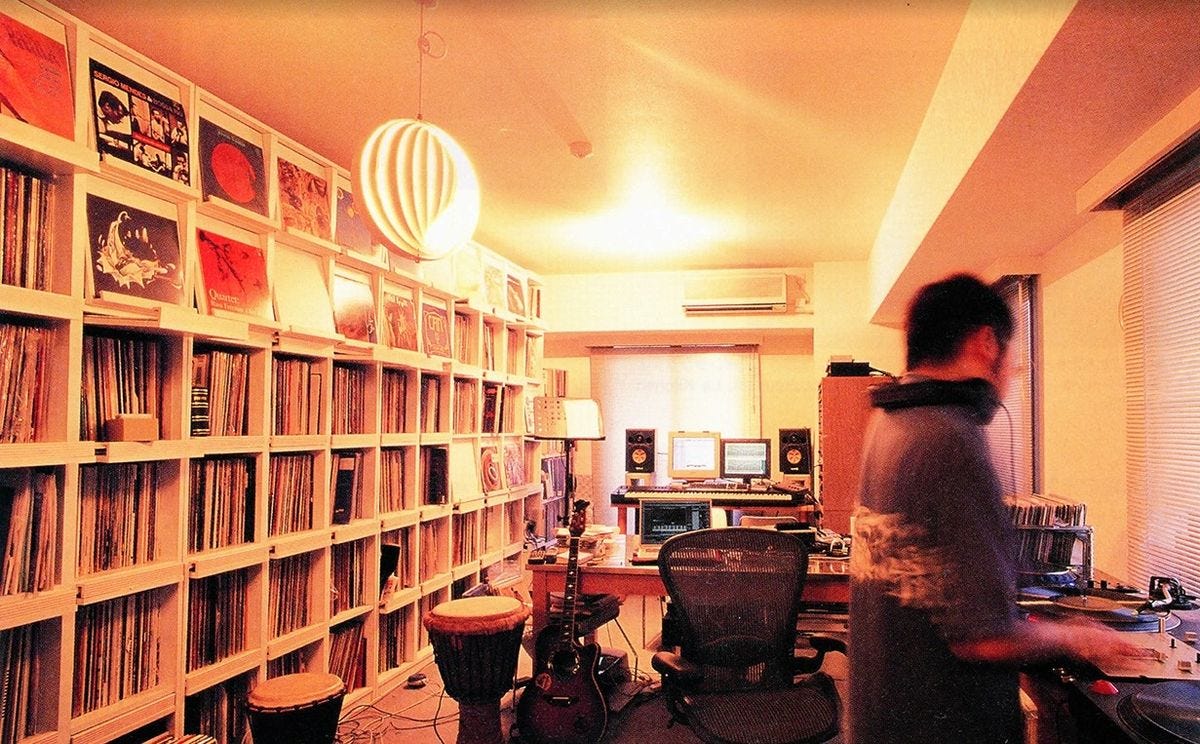
Jun grew up in eastern Tokyo, Japan. Drawn to music from a young age, he went on to own Guinness Records in Shibuya, investing himself in the business side of music. The shop was closed in 2011, a year after Jun’s passing.
Pase Rock, one of Jun’s closest friends, on the ecosystem of Tokyo record shops at the time:
So, as you may know, each record shop in Japan has [had] its own sort of style and flavor.
They’re all gone now, but back then it was an identity for each store, and you went to each store for whatever sort of music they had. Jun’s shop was, for lack of a better term, the underground hip-hop spot.
His store leaned more towards stuff you’d sample, and underground hip-hop. Soul, jazz, lots of stuff like that. 60% underground hip-hop, 40% other.
Jun didn’t really like the commercial hip-hop, so if it wasn’t like DJ Premier, Pete Rock, or Five Deez, he wasn’t with it.
While working at his record shop, Jun eventually dove into the world of production, making his own beats. Learning the ropes of how they were crafted, Jun went on to remix Nas’ One Love off Illmatic, pressing it on wax through Top Graphicers in 1998, and mixing it in with the popular records at the time to gain traction for his moniker (Dimention [sic] Ball at the time)—a technique heralded as a ‘crazy hustle’ by Pase:
I think he [Nujabes] did a Nas bootleg of One Love, that’s what his brother told me.
He would then take that, press it onto vinyl, then throw it in with the Nas bin, so people would be looking for Nas, who was one of the top artists at the time, and they would stumble upon this strange record and think “Who is Nujabes?” not knowing it was the actual owner of the store.
Crazy hustle. Tokyo is tens of millions of people, so lots of customers moving through the shop, and he did really well. I learned the hustle from him.
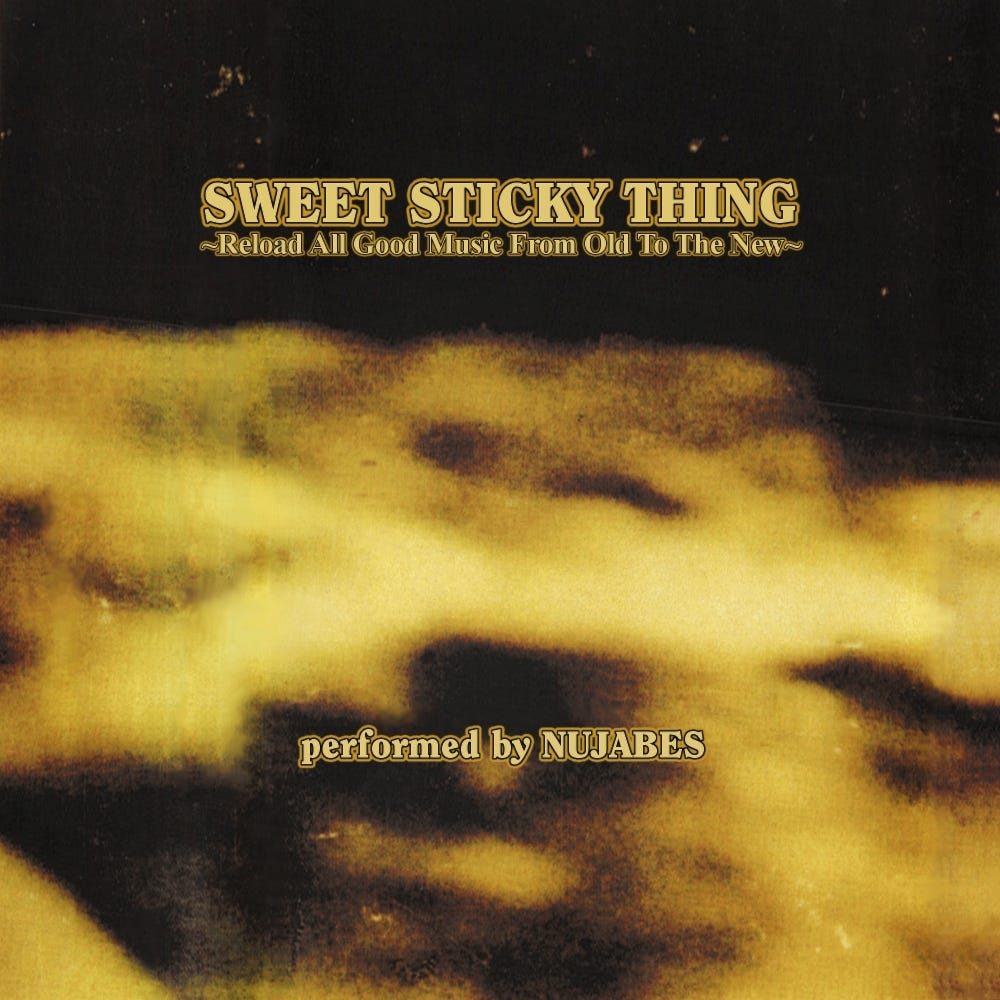
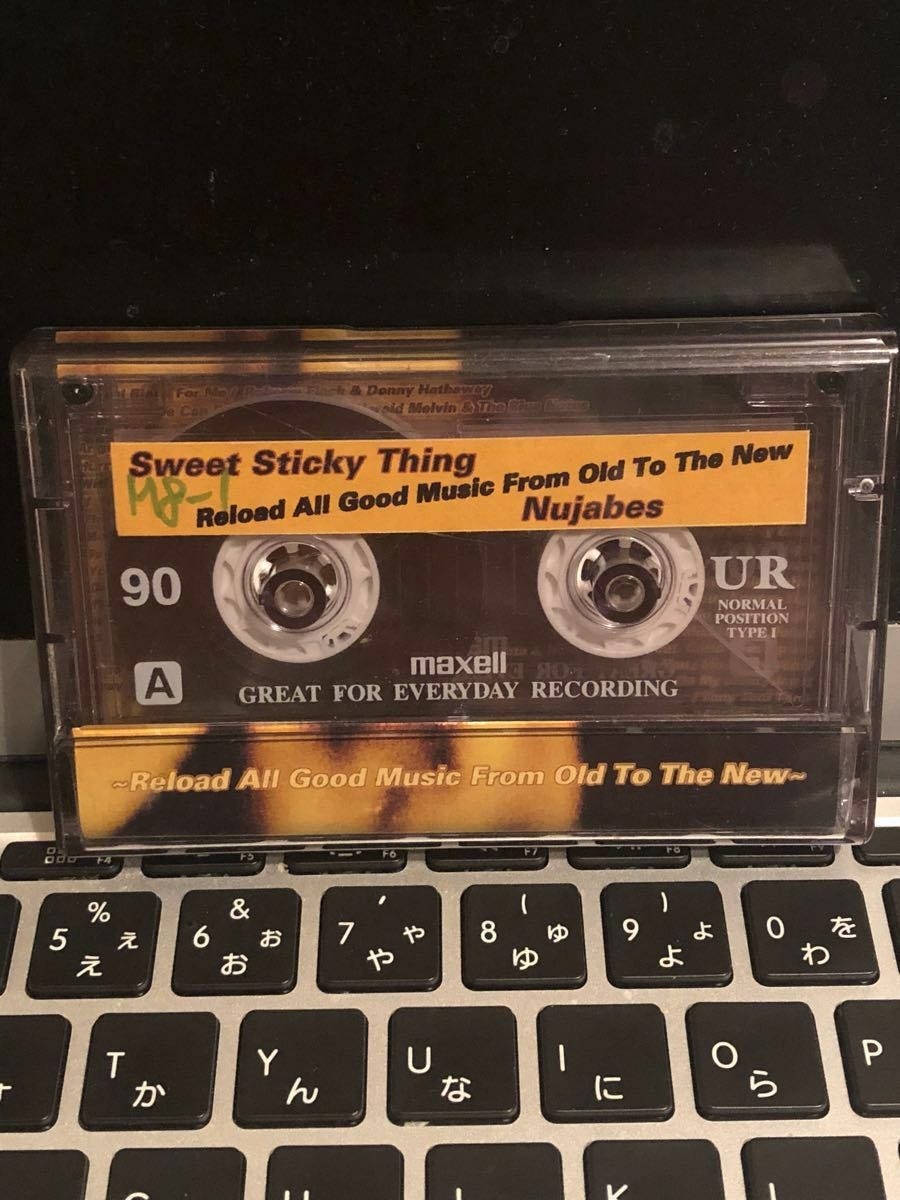
That same year, a 36-track mixtape—18 A-side, 18 B-side—called Sweet Sticky Thing ~Reload All Good Music From Old To The New~ came out through Hyde Out Recordings (now Hydeout Productions, a sister company). The title nods to Ohio Players’ track of the same name off their classic album Honey.
The cassette is a grail among underground hip-hop collectors; limited-run copies surface on Discogs and Yahoo Japan once or twice a year at most, and the prices confirm the scarcity. Cassette-only, local-only. It was the first full-length release under the name Nujabes.
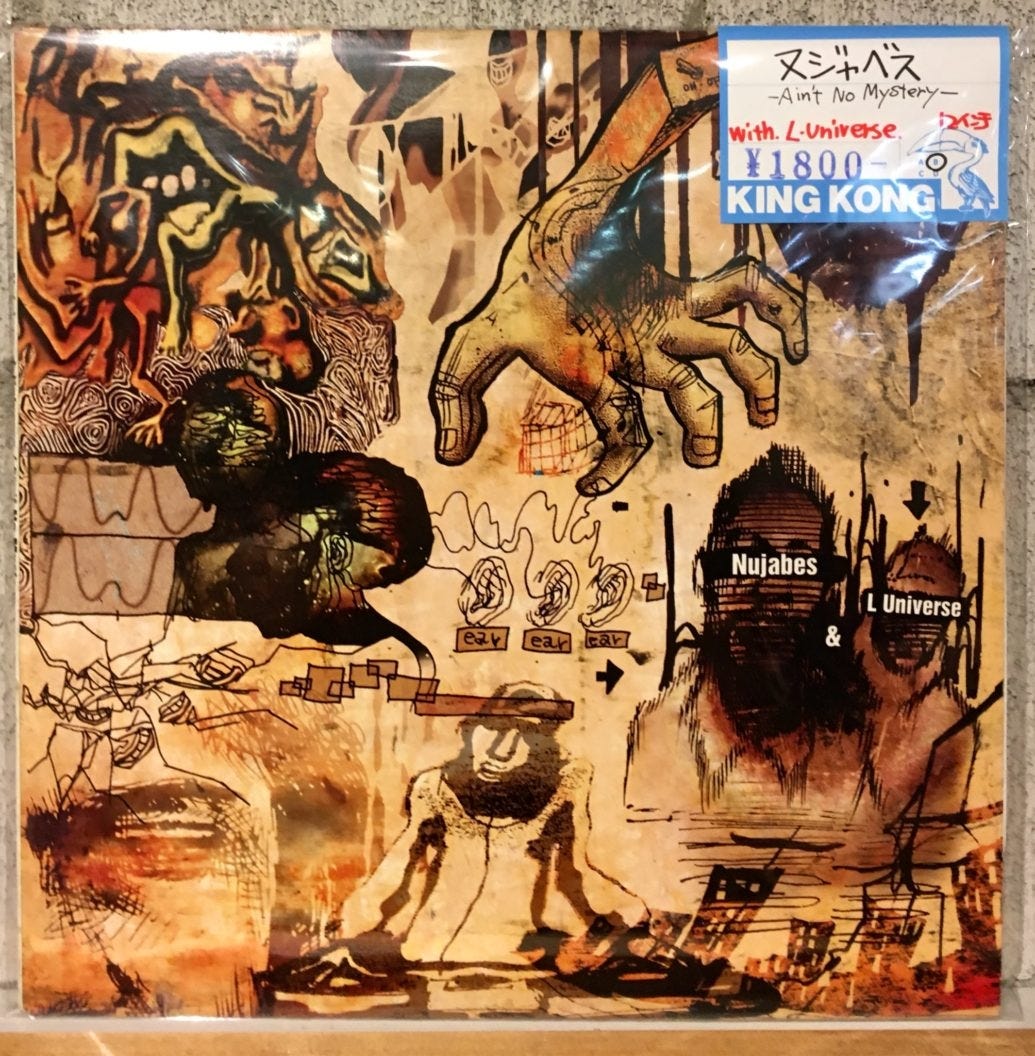
Around this same period, Jun began collaborating with L-Universe, known today as Verbal, and affiliated with his wife Yoon through their AMBUSH line. Marcus D on the connection:
L-Universe is Verbal. Verbal is a ridiculously huge pop star.
A lot of people don’t know this.
I actually didn’t know this myself until I flew back to Seattle and met up with my friend, and showed him a picture and said ‘I got a picture with L-Universe, he collaborated with Jun’ and my friend was like ‘Yo, that’s Verbal!’


Creating To This Union A Sun Was Born with Substantial
Stanley "Substantial" Robinson is a musician, activist, community organizer, and one half of Bop Alloy. He has been a student of hip-hop for over two decades. The connection started with a phone call that Stan almost hung up on:
I met Jun through a friend in college. That friend later went on to become a rapper that people would come to know later as Sphere Of Influence. When my friend went back home to Japan, he got a gig at Jun’s record store. This was before anyone knew who “Nujabes” was.
Jun hit up my friend and asked him if there’s any rappers in New York at the time worth checking out, and my homeboy told Jun to listen to me.
My friend went on to play a mixtape that was made in school, called Disc 1, which happened to have me on it. Next thing you know, Jun calls me up out of the blue.
I thought it was a prank call. The man on the other end of the phone had a really thick accent, and I’ve got a bunch of friends which are clowns [pranksters], so I just thought it was one of my friends.
Luckily, I didn’t hang up, and I took him seriously. He requested I send him more stuff, and I sent him more of my material. After he heard it, he sent me some beats back. This was ’99. Ended up signing a contract with him shortly after, and in ’00 he flew me out to Japan for a month. That was the first time meeting him in-person. That’s when we started working on To This Union a Sun Was Born.
That trip was the foundation. They made music together for years after. Stan eventually returned to Tokyo to record Blessing It, the opening track on Metaphorical Music.
That session came later. The initial stuff with my debut album was recorded in, I want to say January of 2000? Then when I went back out there [Tokyo] to record Blessing It, I also recorded a few other tracks that were unreleased, as well as Eclipse.
The volume of material between them sits somewhere between 30 and 40 tracks, with roughly half intended to stay unreleased. They argued. They came back. That was the shape of it.
Yeah, man; there’s basically enough for an album and an EP. I think it’s safe to say we made between 30 and 40 songs.
…
It is easy for us to remember the positive, or the easy times; the smiles and laughs. I shed tears in front of that man [Jun]. We had fallouts, real fallouts, raising our voices at each other, but we made sure to come back around and break bread after.
I feel like that’s a full relationship; the good and bad. The people who I love the most, am the closest to, and have had the most powerful experiences with, it wasn’t just one-sided, or one way all the time. It was a spectrum of emotions, and I’m glad I had all the experiences with him. From the good, to the not-so-good.
The music mattered. What kept them coming back to each other was simpler. Jun folded Stan into his daily life in Tokyo, and Stan let him. Over time, Stan noticed something in the culture around him:
I liked how humble folks were about things they knew they could do well, but there wasn’t much bragging. If someone said they could do something, that meant they could do it very well.
…
That was a major takeaway for me. You can be great and humble at the same time.
Jun loved to eat. Curry especially. When he found a spot he liked, he brought his people there until it became ritual. Stan:
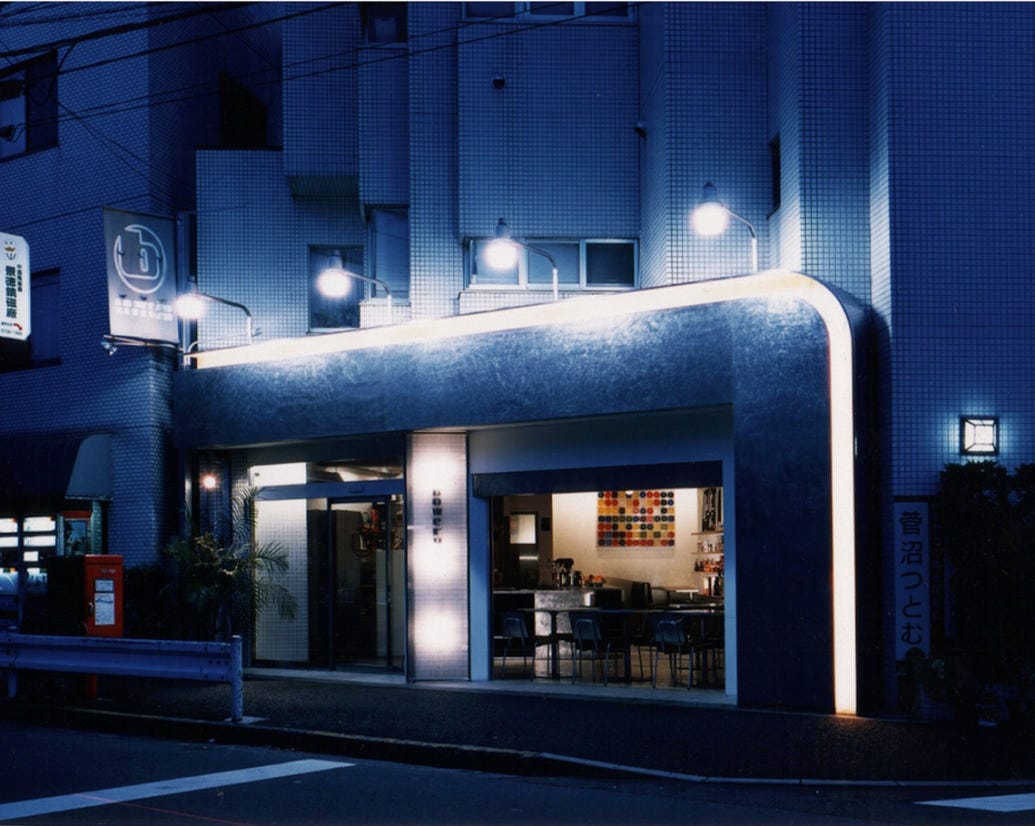
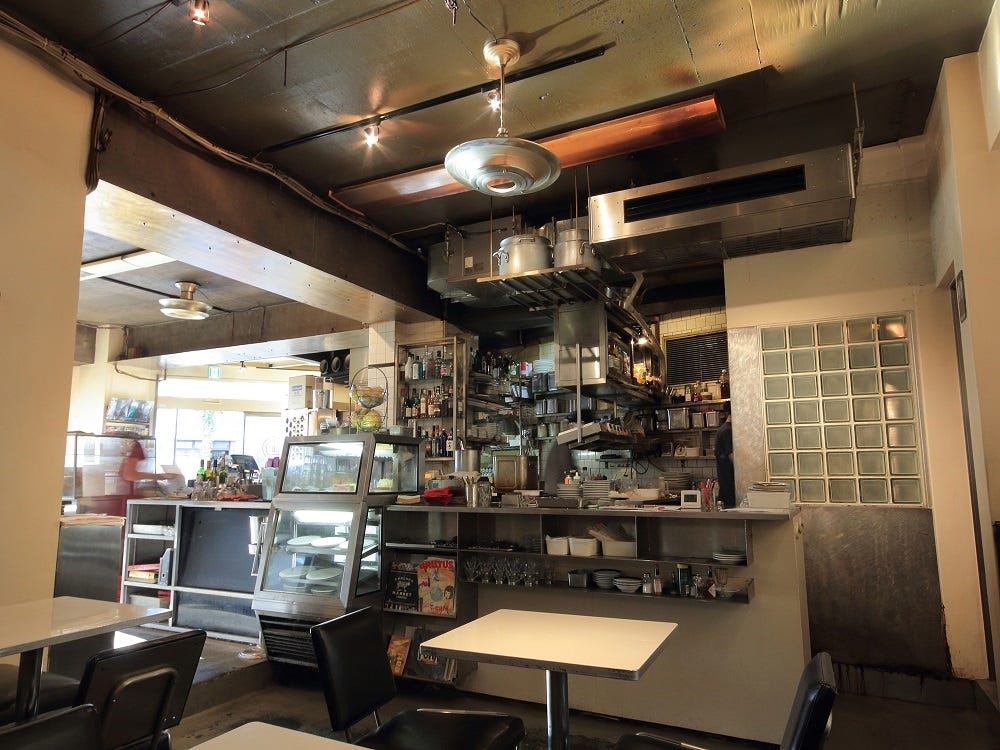
Jun was a huge foodie; anytime he’d find a good spot to eat at—he loved curry—there was this place, this restaurant that we’d always go, and it was called Bowery Kitchen. We loved that spot; think we hit it up twice a week.
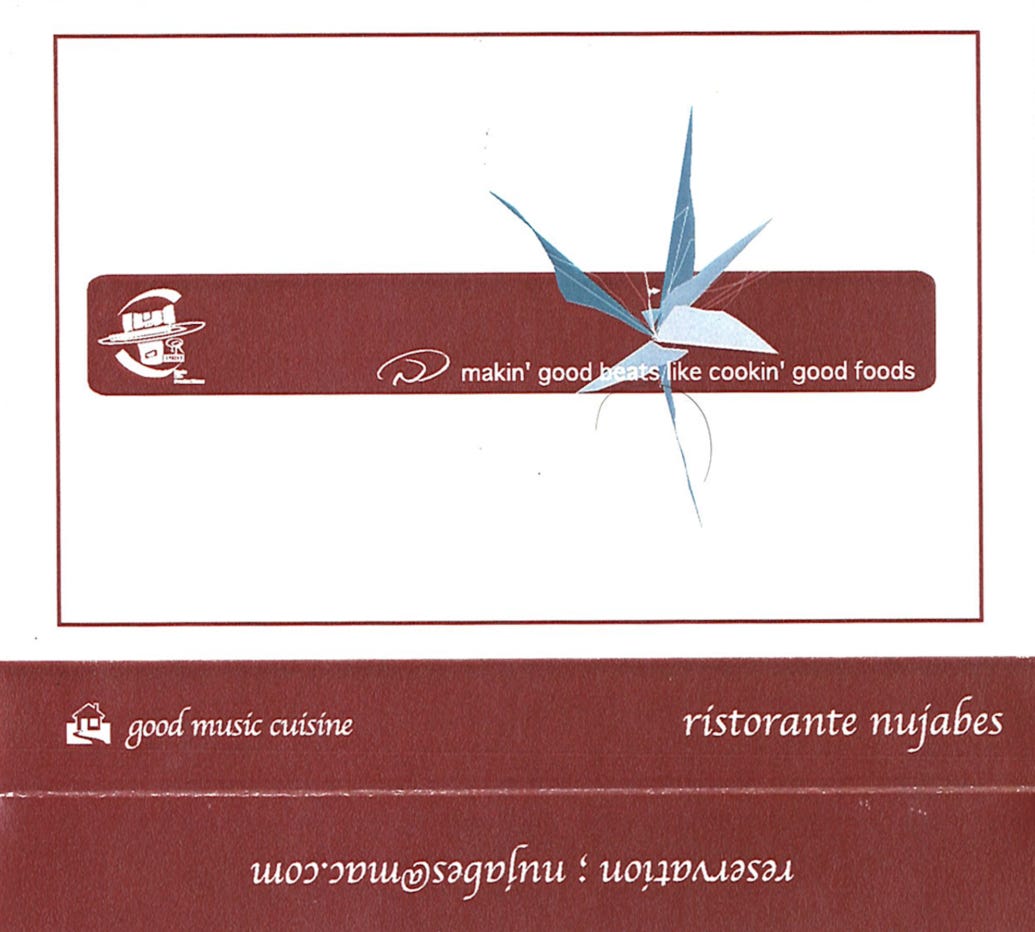
In 2002, Jun released Ristorante Nujabes / Good Music Cuisine: Makin’ Good Beats Like Cookin’ Good Foods, a mixtape dressed in Italian culinary aesthetics, layered with smooth instrumentals. The title tells you everything about where his head was at. The kitchen and the studio were the same room.
Stan:
When you hear his music, you hear parts of the man himself, in all different places. There are certain beats where you can hear the happiness, the sadness, others just relaxing, some chaotic.
He was a curator long before he was a producer, and he never stopped being one. The record shop trained the instinct: sift through everything, keep only what holds up, sequence it so the room has a feel. That instinct traveled from the bins at Guinness Records to the MPC, from the MPC to the collaborators he chose, from the collaborators to the final tracklist. Every stage was curation. Production came last, not first. Academics have names for this. Jun would have called it Tuesday.
Stan, on what Jun’s passing still feels like—not as a fan discovering an artist through a YouTube algorithm, but as someone who sat across from him at Bowery Kitchen:
I guess for me, it’s not this dream thing. It’s still a very real thing. My wife, which Eclipse is about, who I’ve been with for 20 years, she got to meet him in my second trip.
When someone close to you—because obviously I don’t see Pase or Funky DL or Shingo often—to have somebody next to me, on a regular basis in my life, someone who has seen the challenges we faced and how we overcame those challenges together, it makes it that much more real for me.
Tracking Down Funky DL
Somewhere in the late 90’s, a record shop in Shibuya kept placing orders for the same UK artist’s vinyl. Over and over. A year and a half of consistent imports. The artist was Funky DL, a preservationist of jazz-hop who had been releasing records out of the British underground for years, pressing vinyl and shipping it globally through UK exporters.
The shop doing the importing was Guinness Records. Its owner kept reordering.
He was buying my stuff for about a year and a half, and it just so happened that I decided to include my cell number on one of my releases.
He called me, this was in ’99, he called me and explained who he was, what his idea was, and how he just started producing and really liked my style. He actually had just been trying to reach out to me way before that, he said.
I was doing releases with Utmost Records, and every time that he would get a hold of someone, apparently they said they would forward the information to me, the detail and whatnot, but they never did, so it took a while to connect the two of us. He called me in ’99 as I mentioned, and we contacted each other just like that, on my cell phone.
No label introductions. No email threads with publicists. Jun found a cell number printed on a vinyl sleeve and called it. That was how he connected with artists overseas: hear something worth hearing, find the person who made it, call them. The two cut 10 songs together, 5 on the first trip to Tokyo, 5 the following year. Among them: Tuesday Evening, a collaboration with Verbal, a then-unknown Japanese MC. Two decades later, it remains unreleased.
The last time I heard that song, it was played by Verbal at a Nujabes tribute show in a club. The thing about Nujabes was that he was very selective in what would be released, even though he’d record a lot of songs.
Just about how he felt about the recording at the time, that’s what dictated the recordings being released, or shelved.
Beyond the music, what DL learned from Jun was the business. How the Japanese music market worked from the inside. Jun ran a shop. He watched what moved and what sat on the shelf. He understood presentation as product.
As an owner of a vinyl shop, Jun knew how to move music very well, and kept up with trends daily to stay ahead of competitors, researching what was hot or not.
That instinct extended into how he advised other artists. Naming, packaging, positioning. Jun saw the full picture; the same eye that sequenced a record bin sequenced an album rollout. DL, on advice he has carried for two decades:
He taught me more about presentation, and food for thought about album aesthetics. … For example, we did an album called the Latin Love Story. … So, I did that album, and followed it up with Latin Love Story: Volume 2.
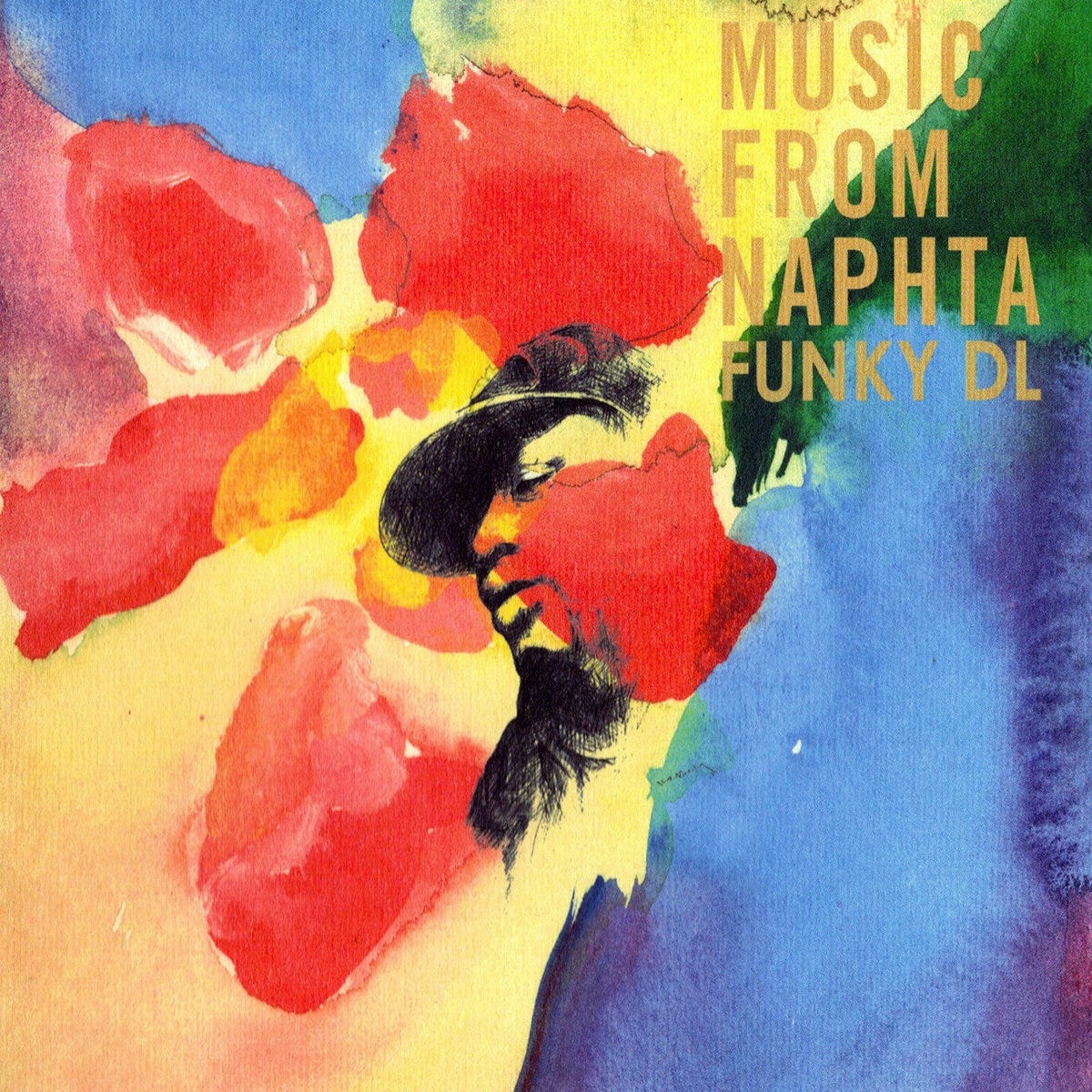
Jun said something like: “DL, it’s not the best idea to name things in succession, such as Volume 1, Volume 2, or Remix. These are songs you’ve already recorded, so put a new spin onto it. Instead of calling it Latin Love Story: Volume 2, why not call it Music from Naphta?”
Naphta is my first name. He mentioned this would intrigue the Japanese market, as they would be unaware of what “Naphta” was. A place, a person, a thing? It would spark interest. Those were kinds of things he would give me advice and insight on.
This is not production advice. This is brand strategy delivered over a phone call in 1999, years before anyone in independent hip-hop was thinking about naming conventions as market positioning. MF DOOM ran the same playbook with Mm..Food and Born Like This—titles that rewarded the initiated and intrigued everyone else—but Jun was applying that logic from inside a Shibuya record shop half a decade earlier, in a market where the bin your album landed in mattered more than a review.
The best shops in Tokyo didn't explain themselves; their curation was the brand. Jun understood that mystery generates pull, and specificity generates identity, and the two together generate the kind of curiosity that makes someone reach into a record bin and pick up something they have never heard of. The Nas bootleg hustle and the "Music from Naphta" advice are the same instinct at different altitudes.
Jun also thought carefully about how music traveled across languages. What connected when the words themselves didn’t land. DL, recounting a conversation with Takumi Koizumi, Jun's tour manager and Hydeout's label manager:
Speaking with Jun and his manager Takumi, I recall a time where we were talking about Slick Rick’s album, Children Story. He said DL, the audience in Japan may not know what you’re rhyming about, but they may enjoy the sound.
…
Even someone in Japan who doesn’t speak English would probably know the word “children” or “child” and know the word “story” and have a sort of idea for what the album would be speaking on or talking about.
After Jun’s passing, DL was close to the process of finishing Spiritual State, the posthumous release that came out in December 2011. He saw firsthand what happens when the only person who knew the intended sounds is gone.
DL still makes jazz-hop. The lessons travel with him. About naming. About framing. About never forgetting that someone is on the other side of the counter, deciding in three seconds whether to pick up what you made or keep walking.
Shing02 and the Luv(sic) Hexalogy
The beat that became one of the most recognized in Jun’s catalog was turned down by the first person who heard it.
The Luv(sic) hexalogy is a six-part series spanning nearly 15 years. There is nothing else quite like it; not in Japanese hip-hop, not in hip-hop period. Shingo “Shing02” Annen rapped on every installment. The original beat, though, was pitched to Pase first.
The original Luv(sic) beat which people know Shing02 for rapping over, was originally for me, I started to record a song for it but I just didn’t really like it so I turned it down and he offered it to Shingo.
Years later, I asked Pase whether he still felt the same way about it.
Yeah for the most part. There is a different appreciation for it now though. I understand Shing02 doing Luv Sic and what Jun was going for. After I heard that song the beat made more sense to me. I think Shingo just did it justice. I wouldn’t have made the song come to life the same way he did. My biggest beef with Jun were his drums, they were so dry at the time. I didn’t like his drum sounds back then. That, and him making beats perfectly on time.
They were exactly perfect, there was no swing in his hi-hats. And for Fat Jon and I, we were very rigid about our “rules” for beats. Stiff hi hats with no swing was like a cardinal sin. But I was young, naive and not very open minded. Jun kinda helped get me out of that. He expanded my horizons a lot to say the least.
Jun’s stubbornness about drum programming became a feature once the right voice landed on it. Shingo heard what the beat was asking for, which wasn’t swing but stillness. Jun knew the beat was right. He just needed the right person to prove it.
When the hexalogy was finally pressed to vinyl, Shingo wrote the liner notes himself. The full arc, what each part meant, and what love does to a person who takes it seriously:
We all know that love can be sickening. That true love, it turns your world upside down, a feeling that can transform your constitution and render you helpless.
…
Love defies formula, it borders on insanity and spirituality, No matter how slim the chances, once you meet the love of your life, you might just end up creating something that may outlast your lifetime…
If you have listened to any part of Luv(sic), you know the scratching. Dense, layered, riding on top of the beat like a second voice. DJ friends including SPIN MASTER A-1 contributed across the series. Shingo, on why it was non-negotiable:
The importance of the scratch DJ to the entire Luv(sic) series cannot be overstated.
It was ingrained on me from early on that having a good scratch to a rap song is key, so I took the time to select the samples from various sources.
Of course we only used vinyl records without exceptions, which enhances the analog aesthetic that Nujabes adhered to.
I reached out to Shingo for additional comment. He declined, respectfully. Everything he needed to say, he said through the music.
He hopes people keep listening.


Exploring Music and Self with Nao Tokui
Summer, 2001. A five-day intensive on algorithms and techniques for signal and sound processing, built around Max/MSP. The Digital Signal Processing Workshop of Japan. Nao Tokui took an empty seat next to a stranger.
If I remember correctly, it was the last lecture session in the morning of the first day of the workshop. I knew very few people then, so I took a random empty seat.
Right next to me, there was a quiet/self-possessed guy, who looked like a few years older than me. After the lecture, we started chatting somehow and introducing ourselves to each other.
He said, “I make hip-hop tracks.”
That was the whole introduction. Most producers would have opened with credits, a discography, a pitch. Jun announced himself the way a cook announces himself: by what he makes, not what he has made. After a few sessions, Nao invited Jun to talk music. Jun heard snippets of Nao’s upcoming album Mind The Gap, wanted in, and ended up credited on the record for programming support. What came out of their studio time together was Rotary Park, the most experimental track in Jun’s catalog. Not particularly close.
They returned to Tokyo after the workshop and kept going. The sessions drifted away from songs and toward something closer to research. Sampling, sequencing, granular synthesis, bending sounds until they broke. Nao:
During our studio time, we tested many different ideas on mainly sampling, sequencing and complex sound effects using granular synthesis and such.
Those snippets of ideas/half-made drum patterns/sound effects must be somewhere in his hard drives, but I believe Rotary Park was the only track we managed to finish.
I think we spent too much time on the exploration of new ideas, rather than composing actual music, which I sincerely regret…
A computer scientist and a record store owner, pulling sound apart in the same room to see what was inside it. One song finished. Dozens of fragments on hard drives. Nao’s regret says everything about who Jun was in the studio: he didn’t want to finish things; he wanted to find things. The destination was never the track. It was the moment inside the process where something sounded like nothing he had heard before.
The friendship outlasted the session. The ideas they explored together would quietly inform everything Jun made after.
Bliss, to some.
The Methodology Behind Metaphorical Music
Everything up to this point—every record shop hustle and overseas phone call and collaboration stitched together across time zones—was preamble.
Metaphorical Music arrived in August 2003, a few months after Hydeout Productions FIRST COLLECTION, dropping in the middle of a seismic shift in hip-hop. Gangsta rap was losing its grip. Kanye West’s The College Dropout was months away from redrawing the entire landscape; producers were about to become as famous as the artists rapping over their beats. In the middle of all that, Jun quietly released a 62-minute jazz-hop album that almost nobody outside of Tokyo heard on arrival. International recognition came later. Carried on the back of an anime that hadn’t yet aired.
Recorded and mixed primarily at Park Avenue Studio, nearly every track carries its own following now, many of them propelled into wider consciousness by Samurai Champloo.
Marcus D, on a misconception that persists to this day:
Beat Laments the World is always mistaken for the Samurai Champloo ending. They’re essentially the same, but the beat was reworked/interpolated for the anime. Uyama played the piano riff on the original.
If you listen to Beat Laments the World, it sounds similar to how the original record sounds, and also has a part of Pase’s acappella in it from Blessin’ It.
On the other hand, Shiki no Uta is smoother. The drums are toned down, the filtered/synth bass was cleaned up and changed etc., and it’s just overall more accommodating for a vocalist.
Less raw.
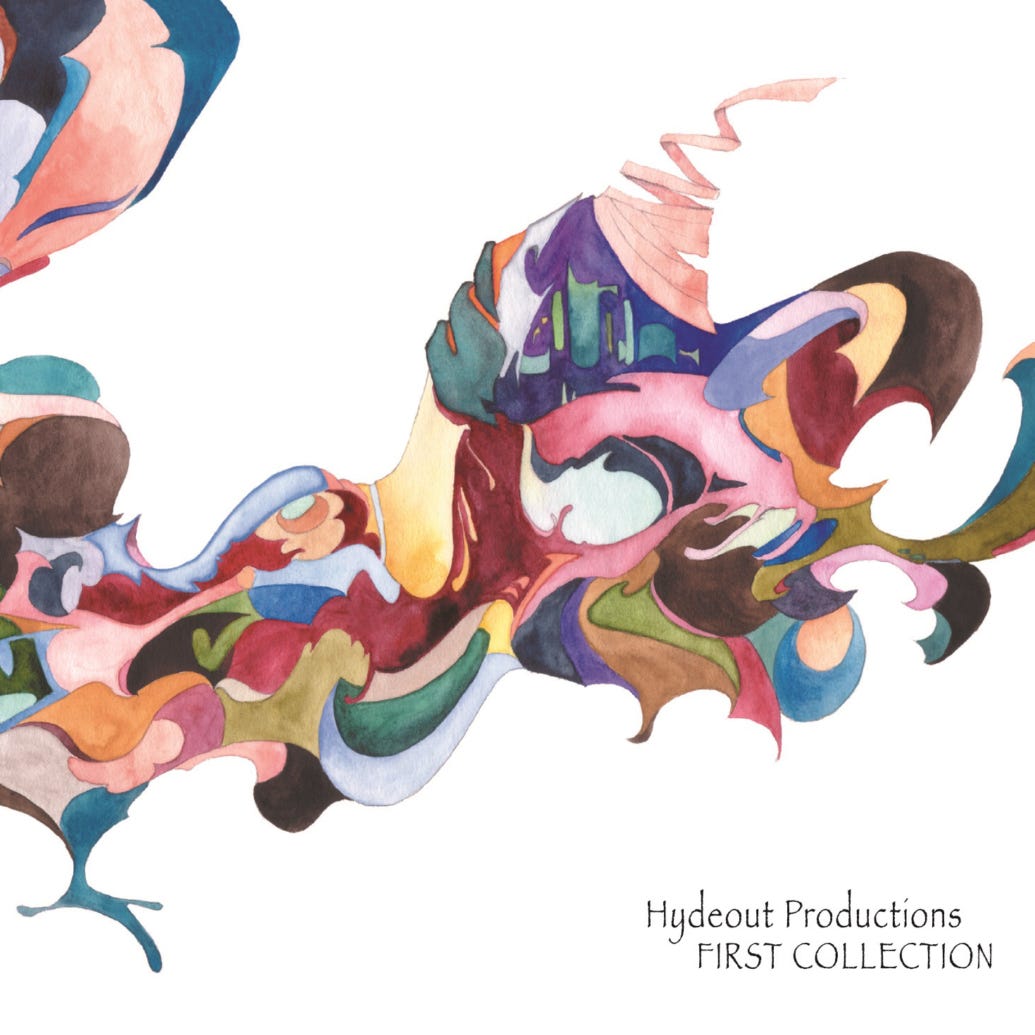
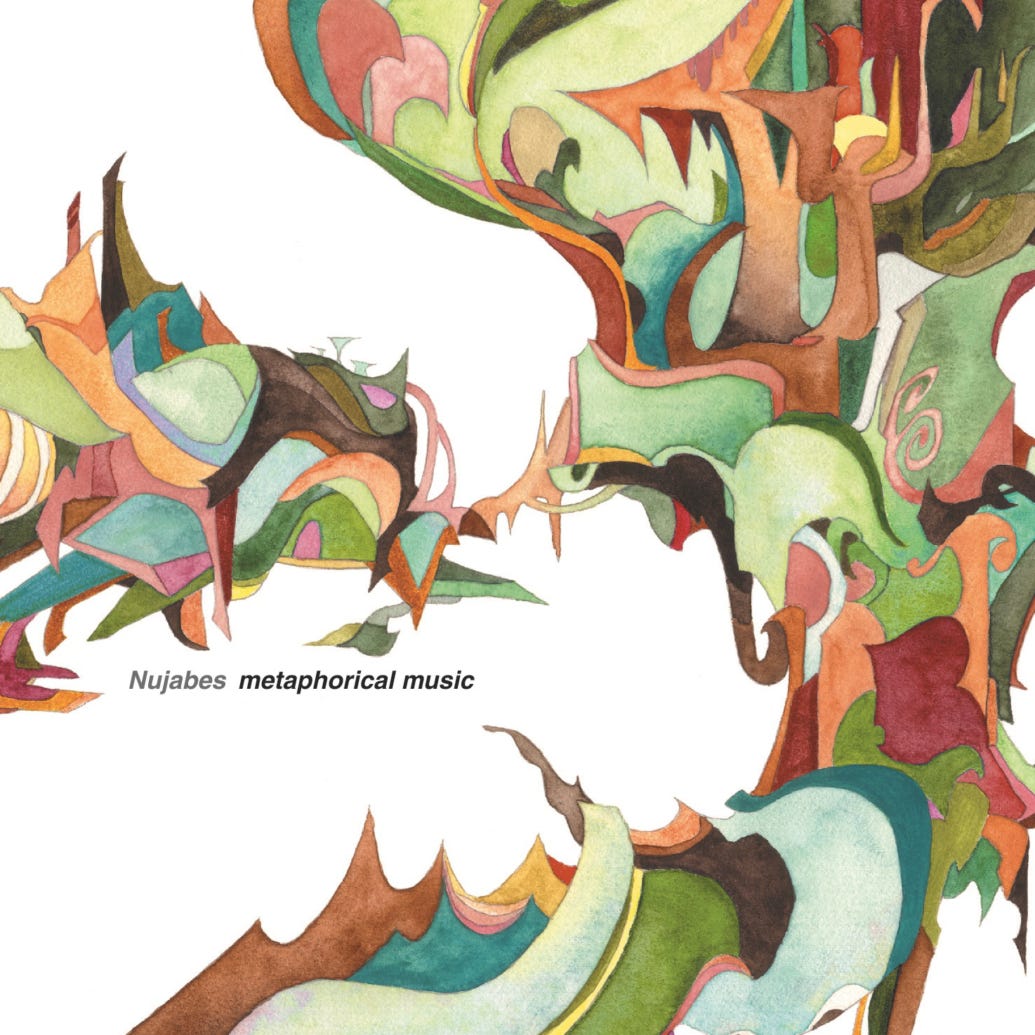
Something changed after Jun worked alongside Fat Jon on the Samurai Champloo soundtrack. You can hear it in the mixes, the arrangements, the way the air moves around the drums. Pase:
I would say that four people specifically: Nao Tokui, Uyama Hiroto, Fat Jon and Monorisick [DJ Deckstream], contributed a lot to shaping Nujabes’ sound.
Among heads, Metaphorical Music earned the rarest designation: a record that made its own bin. It locked a vibe that other producers would spend years chasing and never quite reach. Marcus, on how it was built:
From what I know he used an MPC2000XL, and other hardware. He also used Pro Tools
…
He sampled strictly from vinyl as far as I know, and had/still has an expansive collection. I was lucky enough to inherit one of his turntables from Guinness Records. It’s an old Technics SL-1200MK3 that’s on its last legs, but I still use it every day when I make music.
Jun himself cited Steinberg Cubase VST as his sequencer in a 2003 interview with Sound & Recording Magazine. The hardware was consistent regardless: MPC2000XL for sampling, SL-1200MK3 turntables for digging. The same way a game’s visual identity is inseparable from its engine—GoldSrc gave Half-Life that specific feeling of weight no other shooter could replicate—Jun’s sound was inseparable from the specific chain of machines he pushed audio through. Change the MPC and you change the music.
Three pages from that same magazine give a rare look at the literal setup used to craft both this album and portions of the Samurai Champloo OSTs.


On the second page, two SL-1200MK3 turntables are visible. Marcus owns one of them now. Passed down.
The first Hydeout Collection, a 14-track project with Monorisick (DJ Deckstream) and L-Universe, alongside Metaphorical Music, was the inflection point. The cult formed here. What carried Jun’s name across oceans wasn’t a marketing campaign or a label push.
It was an anime about three wanderers looking for a man called the Sunflower Samurai.
Samurai Champloo: Mixing Ancient Japanese Traditions with Hip-Hop
Samurai Champloo took Japan's Edo period (1603-1868) and scored it with hip-hop.
An anachronistic gamble from Shinichiro Watanabe, the Kyoto-born director who had already wired jazz into a space opera with Cowboy Bebop. Hip-hop was new territory for him. From the director:
The show is set during the Edo era some 60 years after the confusion of civil war lifted. But forget the historical details. Think of it basically like some period in time 60 years after the end of a war.
Watanabe wasn’t a hip-hop head. He didn’t need to be. What he understood was that music could completely redefine a setting; he had already proved it with Bebop. The gamble with Champloo was whether the collision between Edo-period Japan and 90’s hip-hop would feel inevitable or forced. It felt inevitable.
Coming roughly six years after Bebop, Samurai Champloo became the entry point for an entire generation of listeners who didn’t yet know they were looking for this sound.

The show’s influence on what the internet now calls “lo-fi” is real, if frequently misread.
The term has become shorthand for a hyperbolic revival of traditional low-fidelity ideals: downtempo instrumental beats, often with a Japanese aesthetic for samples or accompanying visuals lifted from anime or Japan during the 80’s and 90’s.
Marcus:
Well, there’s lo-fi and then there’s “lo-fi”… [laughs]
The people who say Nujabes influenced the current wave of lo-fi definitely aren’t wrong, but I think there’s some misinterpretation.
I obviously can’t speak for him, but I think Nujabes would have been making something entirely different if he were still alive. Most of his close friends say that he was transitioning into house music, which you can hear in “World’s End Rhapsody” on Modal Soul and a number of other experimental tracks…so I don’t really see the connect between his music and finger drumming over YouTube rips of old jazz songs, which I’m not saying all lo-fi is, but yeah.
On the other hand, music is self-expression, and I know for a fact that’s something he stood for. Expression and creativity are things the lo-fi scene actively cultivates and nurtures from what I’ve seen.
It’s allowed for people to break out of the box of traditional hip hop beats and ignore a lot of the rules that hip hop purists elitists put on them.
When I was coming up, there was always some old head telling me I wasn’t doing it right because of an unwritten set of rules I had to adhere to. I haven’t seen any of that with lo-fi, which is a positive thing. I dig that aspect of it.
Pase, who was there when Jun was making the music that would eventually be called "lo-fi" by people who weren’t, on what the term actually meant before anyone romanticized it:
An SP-1200, MPC, they each have a specific sound to the machine. Combine that with sampling from vinyl and no proper mix on the song, Voila! You get “lo-fi.” Record crackle and whatnot. So, it wasn’t necessarily the artists trying to make their stuff sound dirty, grimy, lo-fi. At the time, that’s what was available and learning how to mix you probably had to go to school for. These were complete do it yourself times. If you don’t have a proper engineer to mix your songs then it’s going to sound lo-fi, or rather, what they call lo-fi now.
…
But in the hip-hop sense, I think you’d have to look at the Anticon movement and a whole lot of west coast hip hop movements and instrumental hip hop that would probably be considered “lo-fi” now.
…
Early Diplo, Jel, Odd Nosdam and RJD2 come to mind. DJ Shadow’s albums were all great and probably a better example of well mixed “Nujabes style” music, for lack of a better term. Ninja Tune and Mo Wax records etc. DJ Krush was the king of this style of music especially from a Japanese standpoint. I say all that to say there are a lot of great examples of where “lo-fi” came from than just Nujabes or Dilla.
…
It’s like putting an Instagram filter on a photo or something but just with audio, I get it. It’s nostalgia of a time gone by. I think it probably feels romantic in a way if you weren’t alive in 1994 or 1997 and I realize that’s just the way life is, things go in cycles. But it’s not 1997 anymore and I’m not big on nostalgia. I lived through it, I was there. I don’t want to go backwards so to speak (musically).
It doesn’t serve me or my life in any way. So “lo-fi” is probably just not for me. That being said, I haven’t listened at all so maybe I’m just ignorant and am missing out!
Jun's sound was lo-fi because the tools were lo-fi; the texture was a byproduct of the process, not the point. When the texture becomes the point—when you sample the aesthetic without the methodology underneath it—you get the filter without the photo. It happens everywhere. E
sports broadcasts that copy OGN's production template without understanding why the Korean format worked. Discord servers that replicate the channel architecture of a successful community without knowing what made people stay. Bedroom producers who approximate a dead man's surface because the surface is all that survived the compression algorithm.
The pattern is always the same: the infrastructure gets mistaken for the ornament, and what gets reproduced is everything except the thing that mattered.
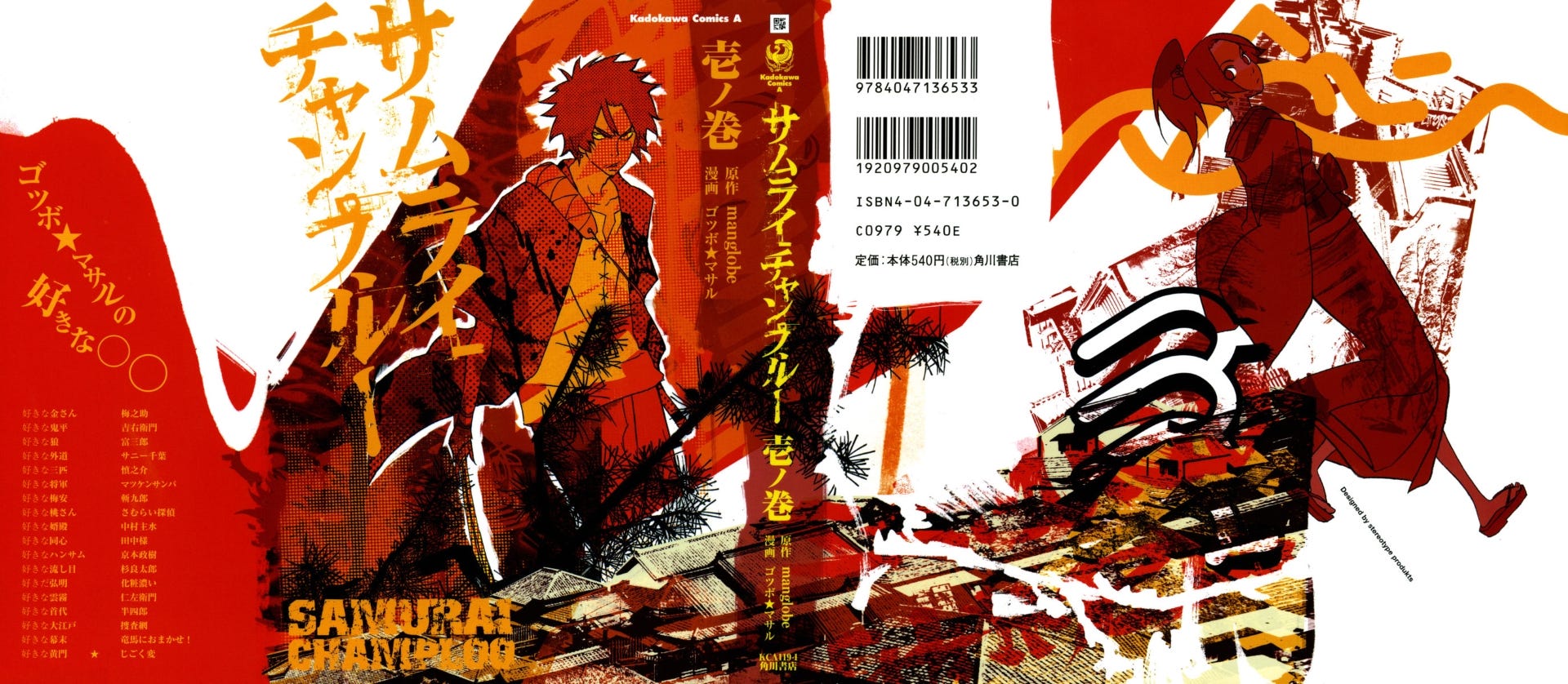
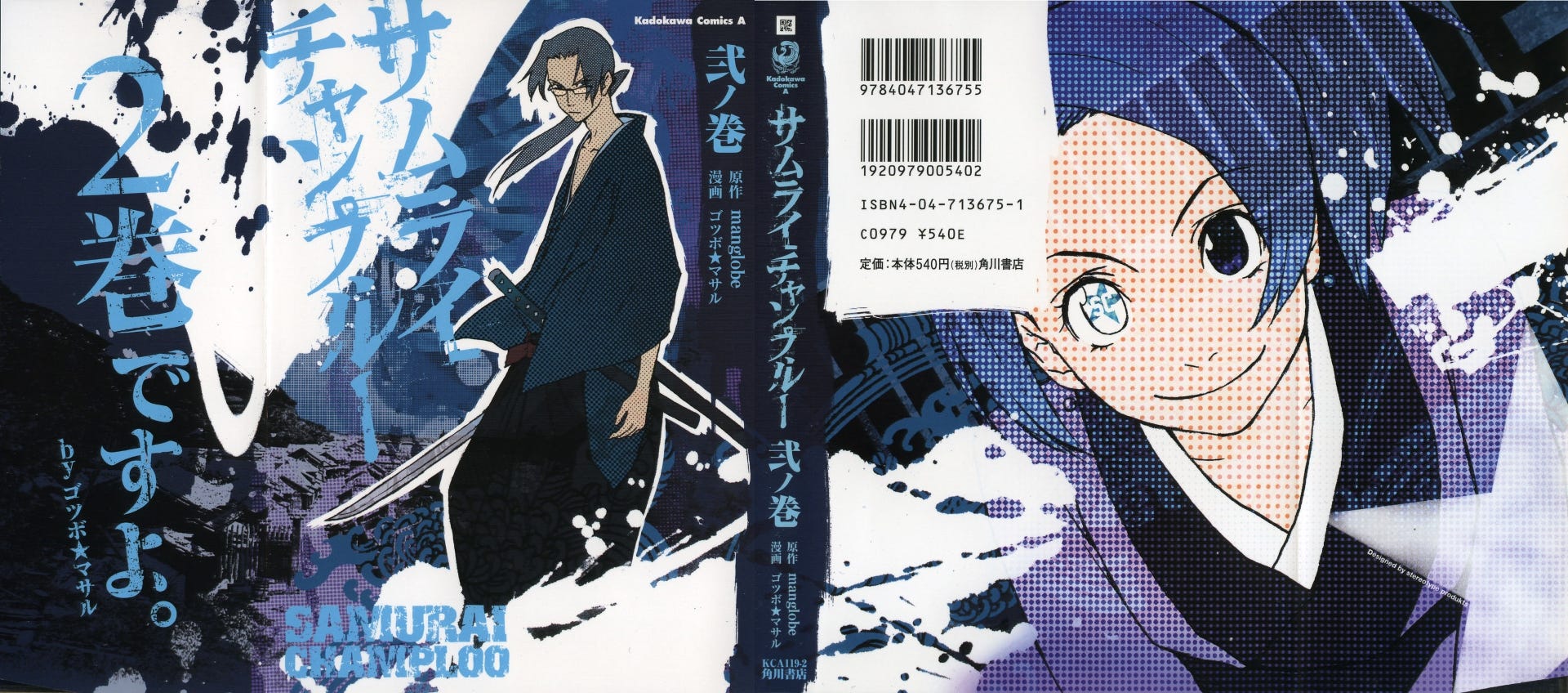
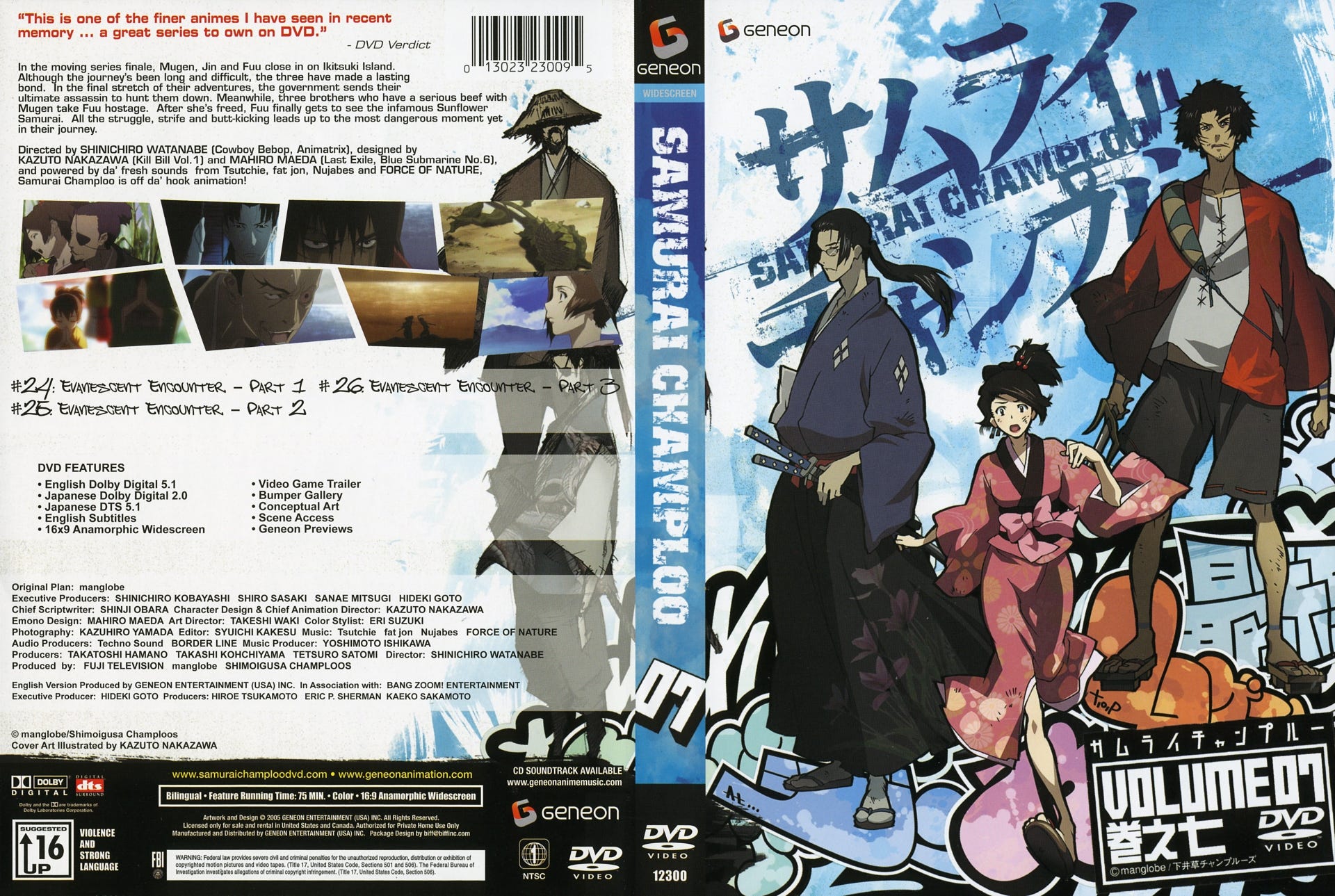
Rising up a few years before SoundCloud rap got on its feet, the lo-fi movement produced a generation of bedroom producers who latched onto the aesthetic, often attributing their interest to Samurai Champloo and its soundtrack. The sound branched into sub-genres with their own names and audiences: chill-hop, chillwave, study beats, and more, each drifting further from the trunk.
Most of the background music heard between sequences, though, was produced by Shinji “Tsutchie” Tsuchida, not Nujabes. The assumption that Jun scored the majority of the anime is widespread and wrong.
The complete Samurai Champloo soundtrack spans four releases—Departure, Impression, Masta, and Playlist—not just the two collaborative projects between Nujabes and Fat Jon. Several tracks from the anime don’t appear on any of them.


Tsutchie, on how the whole thing started. A phone call from Watanabe that set off a chain reaction, eventually reaching Jun through Takumi Koizumi, who then brought Fat Jon into the fold:
One day, I received an unexpected call from anime director Shinichiro Watanabe. He told me he was working on the production of a crossover historical anime series set in Edo period, which combined Samurai and Hip-hop. Then he added “I need someone to take care of the soundtrack.”
The show worked because Watanabe’s direction was precise enough to make two fundamentally different things feel like they had always belonged together. Themes of race acceptance and determination through common interest gave the story a personal dimension that most anime in this lane never reaches for.
Mladen over at The Find Mag captured the tension around the show’s legacy:
The influence of these four mostly unknown artists on the the new batch of young beat-makers is palpable, many of whom will admit that Samurai Champloo was their first memorable interaction with hip hop. In this case for anyone who has watched the influx from the outside, it’s clear that the series has led to an over-inflation of the importance of the four acts mentioned, to the point where the music itself is perhaps no longer judged on its own merits but through a lens of devotion and nostalgia.
Whether or not they’re ‘real’ hip hop fans is a ridiculous point to argue, as we’ve all had our different entry-points to this music, but the influx of an enthusiastic and international youngsters into the scene has been nothing but positive for hip hop overall.
The show is 15 years old and still pulls people in.
More often than not, the thing that keeps them there—the thing they search for after the credits roll—is the music.
The Era of Modal Soul
If Metaphorical Music was the announcement, Modal Soul was the proof.
The dividing line is audible. Something shifted in how Jun approached production after working alongside Fat Jon for the Champloo soundtrack; cleaner mixes, smoother currents, more air in the rooms. People close to him have consistently pointed to this period as the hinge.
Early Jun and late Jun. Two eras, same person.
Pase:
The Samurai Champloo deal came in around the same time; I’m not 100% sure about the details regarding that, I would have to check with Fat Jon, but I think that [the trip and time in the studio] is why that ended up happening. They were doing that project together, so they ended up in the studio together for a little while.
You get a different Nujabes after that, in my opinion.
…
To me, it’s like night and day. After that period, his [Nujabes’] music got way better in my opinion.
…
His music got a lot more musical especially when he started to collaborate with Uyama Hiroto. Hiroto worked very closely with Jun for years. A lot of Modal Soul is Nujabes and Hiroto.
A lot of the later stuff is also if you pay attention. I love that era of his music when he started to incorporate Hiroto’s playing into his tracks. I’m a big Uyama Hiroto fan. The later trips I had with Jun he was starting to play more instruments, trumpet and flute, a lot of flute. Another Fat Jon influence I think.
The influence ran in both directions every time. Stan:
Jun was always digging for new music, and was a huge Dilla fan. He was also a big fan of Fat Jon. He started to play flute because he found out that Fat Jon played flute.
It’s that friendly competition. I would say that the greatest artists usually keep great company, and almost always are influenced by those they work closely with. … Both ways.
You can hear a difference in Jun’s music prior to working with me, and after. Same thing with when him and Funky DL collaborated.
Same thing with his collaboration with Fat Jon, especially—you can hear a lot of dance music feelings in his work, something Fat Jon was already doing before Nujabes had technically put something out. There is always an exchange, and even if we’re not talking Nujabes.
“Both ways.” Stan says it plainly. Jun’s version was different in scale. He didn’t absorb one collaborator and settle. He absorbed everyone’s, serially, over years, and each absorption changed the output in ways his collaborators could hear and name afterward. Pase heard it after Fat Jon. Stan heard it after himself. DL heard it after the naming conversations. Nao heard it after the Max/MSP experiments.
You can literally hear the before and after on the records. Most artists absorb influence invisibly; you have to take their word for it. Jun’s catalog is the receipt.
A show in Seoul, right after the release of Modal Soul, where Jun himself is playing a flute. A Japanese producer on a Korean stage, calling himself ordinary, in a country where the cultural exchange between those two nations carries weight that no Western journalist would think to name. Jun told the crowd:
If anybody knows, I came to Korea one time to DJ, but at that time you probably did not know me, and at that time I was maybe just with my first band with two or three people; [we were] mainly tourists.
I had one-two-three 12-inch released six years ago or something, so I was just… I am just an ordinary guy. [sic]
An ordinary guy doesn’t find the samples Jun found. The depth, the rarity, the sheer obscurity of what he dug up and flipped—this is the work of someone who spent more hours in crates than most producers spend in the studio. The most recognized sample in his catalog is I Miss You by Noriko Kose, tucked inside Reflection Eternal. Another, Tens (Calmaria) by Nana Caymmi, became a deep cut that heads across the globe spent collective hours tracing back to its source.
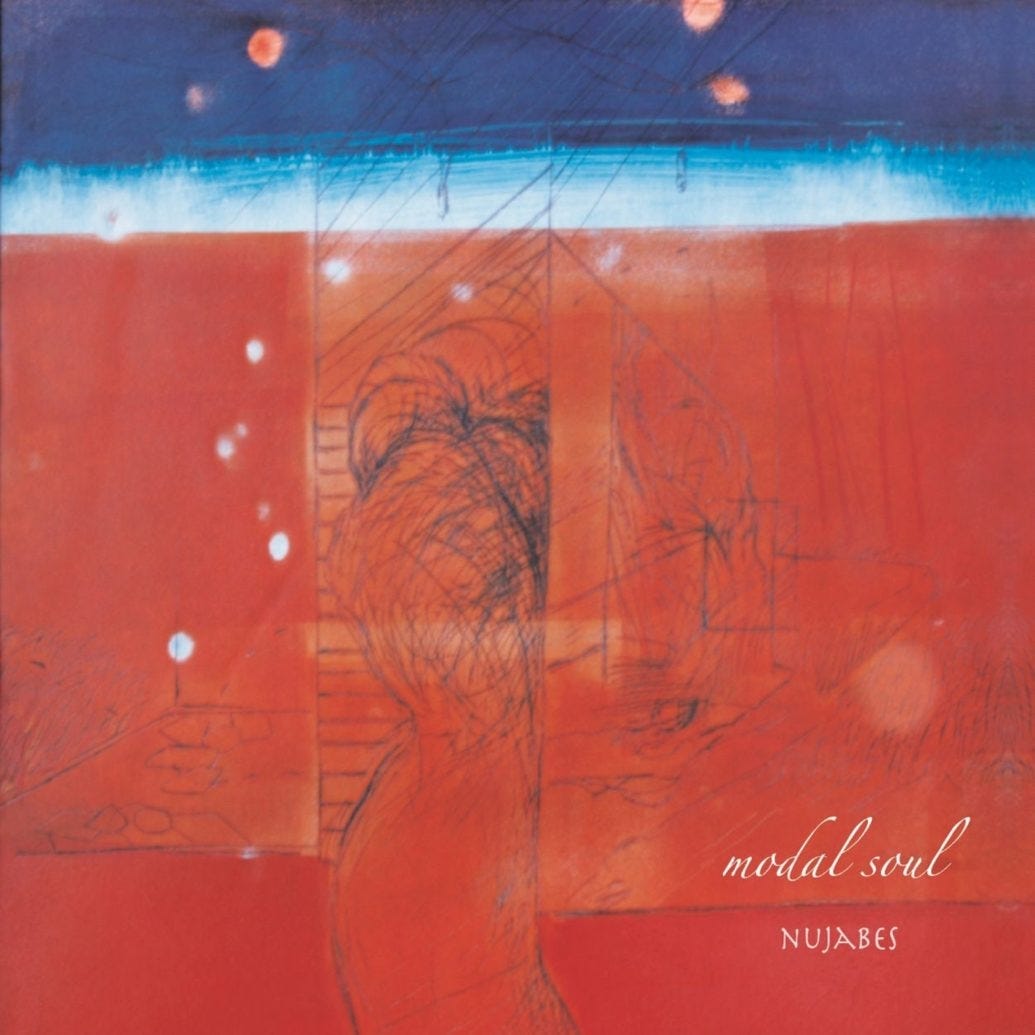
Modal Soul remains the crowd favorite. On the surface, it can sound like a continuation of Metaphorical Music. Lean in closer. The architecture is different. The rooms are bigger. The air moves differently.
Jun’s Last Album: Hydeout Productions 2nd Collections
By 2007, every album Jun released had been better than the one before it. Each one tighter, more open, more deliberate than the last. In November of that year, he put out what would be—though no one knew it yet—his final album.
Fourteen tracks. Eleven produced and mixed by Jun. The remaining three: Uyama Hiroto’s Waltz for Life Will Born and Windspeaks, alongside Emancipator’s With Rainy Eyes.
For years, the sixth track, Counting Stars, held the title of most viewed Nujabes song on YouTube. It was one of the earliest uploads of his music in the West, arriving on the tail end of the Samurai Champloo wave, and it stuck. People found it and stayed.
The sound had moved again. More serene. More atmospheric. Warmer than anything before it. It is also the project that confuses listeners most; depending on the track and the person hearing it, it evokes sadness, peace, guilt, or confidence. All four at once isn’t an uncommon answer.
The cover is unlike anything in his catalog. Not the work of an in-house or local artist; abstract, its warm tones shifting back and forth, painted by Cheryl McClure, an obscure artist out of Texas whose sole album art credit is this one. How Hydeout found her remains unknown.


After the release, Jun stepped away.
No public explanation. No announced return.
Then silence.
Jun’s Lasting Legacy

Twenty days after the fact, it was confirmed publicly that Jun Seba, the musician from Tokyo whom a global audience knew as Nujabes, had passed away. Attempts to resuscitate him at a hospital in Shibuya had failed.
The hip-hop world had already buried James “J Dilla” Yancey four years earlier. Now this.
Shingo wrote the following:
It has been announced that Jun Seba, aka Nujabes, Japanese hip-hop producer extraordinaire, passed away late February.
We deeply regret the loss of a unique talent and a close friend.
…
Even last week, I passed by his house and called him thinking he was still home.
…
Jun Seba will be dearly missed by his family, friends, colleagues, and fans worldwide.
Jun died at 36. His catalog is frozen at three albums, each better than the last. There is no decline to point to, no late-career pivot, no album that makes fans argue about when he lost it. Death does that. It seals a reputation in place. Dilla’s catalog got the same treatment. So did Big L’s, and Big Pun’s, and every artist whose work stopped before the dropoff could set in.
The question is whether the music earns its reputation or just benefits from the timing.
Listen to Metaphorical Music, then Modal Soul, then 2nd Collection in sequence. The answer is in the progression. The mixes tighten. The arrangements open up. The collaborations stop being guest features and start being the architecture itself. This isn’t a catalog frozen at a peak. It is a catalog that ends while still climbing, and the difference between those two things is the difference between myth and evidence.
The closer you look at Jun’s career, the more you see a network. Remove Fat Jon, the mixes never clean up. Remove Hiroto, the piano phrasing disappears. Remove Shing02, the hexalogy doesn’t exist. Remove Nao Tokui, Rotary Park and the experimental impulse behind it vanish. Jun was the filter at the center. He chose the people, absorbed their inputs, and produced something none of them would have made alone. They know this. They say so, on the record, in this piece.
His people did what you do when someone leaves unfinished work behind. You pick it up. Shingo went to the studio. Friends gathered to piece together the project Jun had been building before he was gone.
DL, a producer who builds from scratch and knows what it means to match sounds to intention, on the process of completing Spiritual State:
In regards to the posthumous project Spiritual State, as you may know, as a producer it’s very difficult to infer or assume things that another musician intended to do with the music. Matching sounds and instrumentation up was incredibly hard to do for that album. Takumi was telling me it’d be released soon and I was loving it, it was just the sounds that were being matched up were very difficult to make sound correct.
You may have different versions of the song. Perhaps you used this MIDI sound, or that one, or when the song is loaded up you want a different version, or you may know what sounds to record that no one else does.
When Nujabes passed away, no one knew what sounds he was using or what his final intentions were regarding that album’s overall sound. It took a really long time to figure everything out. Even something as simple as what you hear as a piano, it would have to be matched. Music programs these days, you can open a window and there’s 50 piano sounds, so which one is it? A hard sound, soft sound, a more sustained or subtle sound.
That’s something which I think is interesting about his last project.

Spiritual State came out in December 2011. Jun's third album, assembled by the people who loved him. It didn’t have the polish of what came before; by nature, it couldn’t. The weight was there.
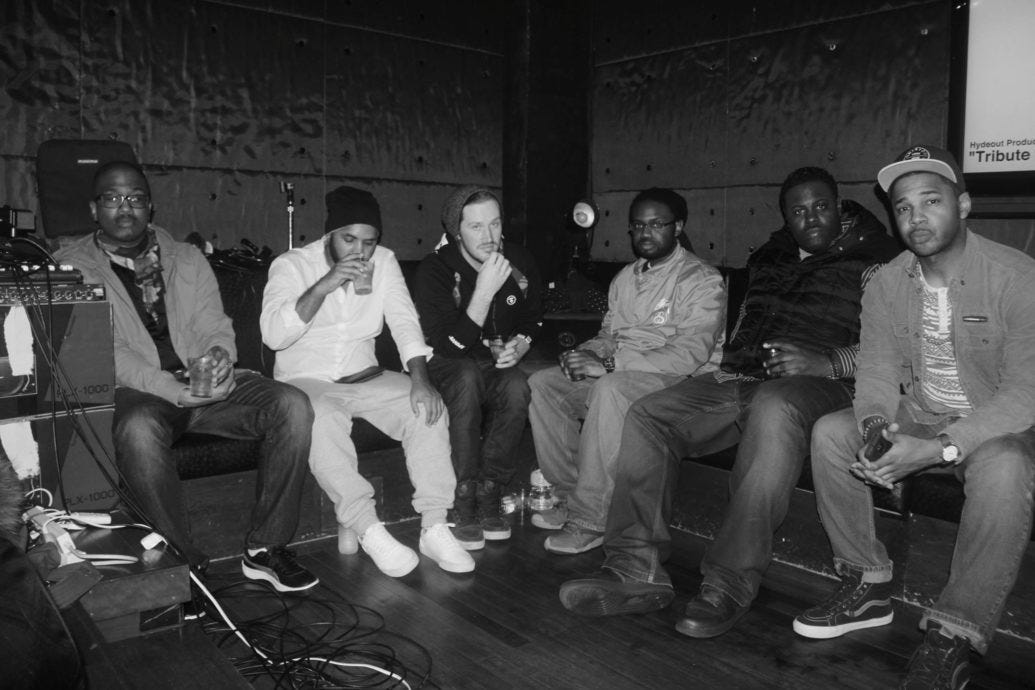
Nao Tokui said it best, when asked about what he thinks Jun would say to him today:
“Nao, don’t waste your time by just testing new ideas. Make music!”
Jun started with confidence that outpaced his ability. That gap closed fast. The record shop trained the ear; the collaborators expanded it; the filter was his alone.
His Spotify monthly listener count still sits in the millions; eight years after his last release, no new material, no label push, no algorithm gaming. The producers from Jun’s generation whose catalogs will still be searched for in another 20 years are the ones who built exchange networks like his: Dilla and the Soulquarians, Madlib and the Stones Throw orbit, DJ Krush and the Mo Wax axis. The ones who produced in isolation, no matter how talented, will fade at a faster rate. Jun’s numbers are the early evidence.
He wouldn’t have cared about any of that.
What Jun cared about was the work. Making it better. Digging deeper. Finding a song inside a record that nobody else had heard yet and flipping it into something new. Bringing a friend to a curry spot he loved and watching them try it for the first time. Calling a rapper in New York on a landline because he heard something worth hearing.
Enjoying life.
This was Seba “Nujabes” Jun’s immortal legacy.

