
Marcus "djWHEAT" Graham: The Legacy
The biography of an esports pioneer who helped shape video game broadcasting, and blueprint Twitch.
Special Thanks
With gratitude to the friends, mentors, and colleagues who contributed below:
John Carmack
Justin Kan
Kevin Lin
Sundance DiGiovanni
Richard lewis
Sean Plott
Rachel Quirico
My most sincere thanks to Marcus, as a long-time mentor and friend, for his trust with handling a piece like this.
Since its initial release, this work has been plagiarized and reproduced on multiple occasions without proper credit. If you incorporate any portion of this work into your content, please provide appropriate attribution and include a link to the original source (this page).
Since publishing this piece, Marcus has moved on from Twitch, and is now working as VP of Community Development at Fortis Games.
The Pitch
On October 13, 2017, two weeks to the day after I moved to Seoul, I was still chasing my own answer.
I emailed Marcus on a whim:
Hey Marcus,
I’m in Seoul. Right now, I’m in a McDonald’s so I can pick up WiFi.
Life’s really different here when you’re not visiting, for sure.
I’m getting back to writing soon, just wanted to get settled in. Saturday will be two weeks.
Seeking out opportunities still. Anywhere, everywhere, everything.
I’d like to still do a text interview with you. The usual.
Let me know if/when.
All the best.
A few hours later, he said he was down.
Part I: Forging Dreams
The computer that started it all, and the group that stuck with him for life.
Marcus Graham has had skin in the game for over two decades—at the core of esports and internet broadcasting since before either had a name.
Since childhood, Marcus has been fascinated with the idea of what a video game could be. At the time of this interview, he was Twitch’s Director of Creator Development.
Rather than having a limited interest, how did your passion for video games arise?
I distinctly remember my first experience with video games being in the late 70s, early 80s.
So, in a crazy way, they’re some of my longest memories. Some of the first memories that I have, which was playing the Atari, or at least trying. Hell, maybe even being “that kid” that has a controller in his hand, but maybe brother, or mom, or dad is playing. All I know is that I’m fixated on whatever this thing is on the television.
This was age 3-5 that I really remember this happening. The Atari was something that we got games for regularly. I guess what probably happened was, back in the day before there was Chuck-E-Cheese, there was Showbiz Pizza. Showbiz Pizza, and eventually Family Fun Center, would be my two big arcades. That is where I truly fell in love with video games.
The sights and sounds from this very chaotic and creative brain that I had growing up, that felt more like home than maybe even home did. Wasn’t into skiball or tickets; I just wanted to play every single game that was there [in the arcade] and always had a desire to just be good at that. I immediately recognized that the “score” was a measurement of in-game performance. It was all about getting a better score.
Admittedly, this is probably where my problem started, too. I’ll get more into that as I go on.
That’s when Nintendo was released; I remember Christmas Day, getting the Duck Hunt Gyro version of the Nintendo [NES], which came from grandma and grandpa, because mom and dad wouldn’t buy it. Who knows? All I knew at that point is that, I became a Nintendo kid at that point.
They [my family] would go golf or play basketball, and I would say ‘nah man, we’ve got all these games that we can play’, and those were the games that I wanted to play. From an early age, I was already conditioning myself. I don’t even know what the fascination was, man, like… I think part of it was, this was just an amazing new thing. It was a whole different world; there was a feeling of accomplishment that came with it. During this era, you also saw constant evolution of what was being played and made. It just became… every kid just gets a “thing” — there’s no doubt about it that video games was my “thing”.
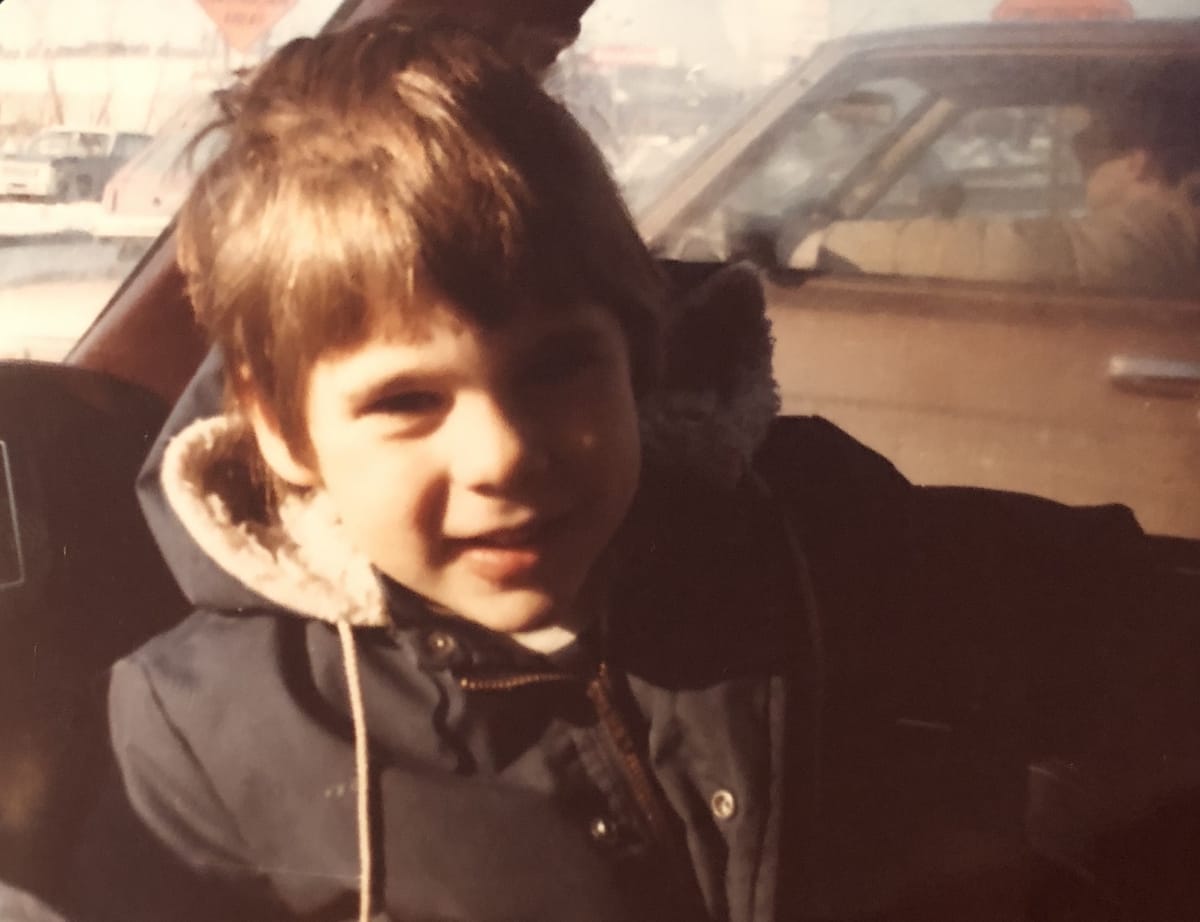
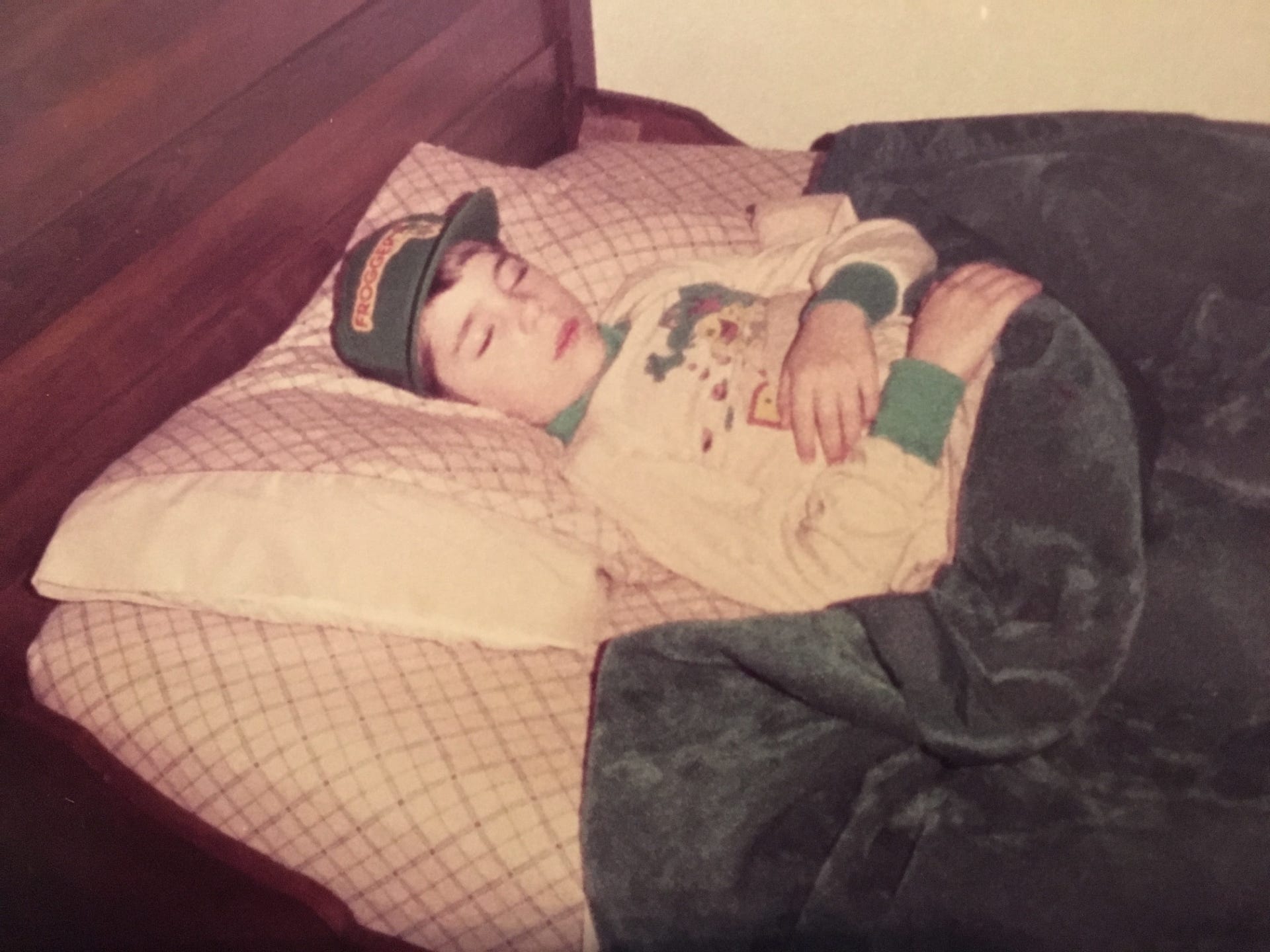
I was the kid wearing Frogger hats, Pac-Man pajamas, and I wanted Donkey Kong sheets. I just couldn’t get enough.
A movement.
Yeah.
It’s hard for me to put myself back in the shoes of young Marcus, of young djWHEAT, because I don’t necessarily remember why I was so drawn to video games.
What I know is that I couldn’t. Fuckin’. Get. Enough.
I had a problem as a kid; I had the problem of choosing video games over responsibility. Choosing video games over eating. Choosing video games over doing whatever. There was always something new to play, there was always a kind of friendly competition.
“Hey, I got X score in Y game, see if you can beat it!”
I couldn’t get enough of that.
Give me some years.
The Atari came out in the late 70s. I was born in ’77, so the Atari was in our household already. The Nintendo was ’86. I would have been 9 years old when I got my Nintendo.
From ages 5-9, I played a lot of games at home, but I wanted to go to the arcade. When we went to the movie theater, or a pizza place, or anywhere, I wanted to play the arcade. If I got to choose where we’re going to dinner, then we were going to Showbiz Pizza, just so that I could play games.
I don’t want anyone to think that this is a bad thing, but there was no doubt about it: I was addicted to video games.
I’m pretty sure I probably took a 5 [$5 bill] too many from my mom’s purse. I would get grounded from video games, and my mom would have to call all of my friends’ parents, and tell them “Marcus is grounded from video games; he can’t play.” so I would scheme to play games. I would go to Shop Co., and they’d have a demo stand set up; anything to get the gaming fix.
At the same time, I would say that there’s no doubt about it: video games were my first creative muse. If I got grounded, I’d be like “…well then, fuck! I’m going to draw the video game I’m going to make, I want to create some concept for games,” right?
So I was just channeling any creative energy I could while I wasn’t playing games to try and do so. I thought “okay, this is what I want to do when I grow up, I want to be making these things, sharing my stories and ideas and thoughts with the world,” so from age about 3… that was the first time I was consciously aware “Ok, there’s an Atari here, we’re here, playing things” until now. It’s never stopped.
From 3 until probably… let’s just say 13, maybe 12, was my “arcade, NES, SNES, Sega Master System” days.
Were you aware during any time during those days of the gaming competitions happening, such as the Nintendo World Championships or names like Billy Mitchell, Steve Wiebe, or Todd Rogers?
I tried getting my hands on any gaming magazine they had out at the time. They’d be in there pretty regularly, since the magazines would post scores on certain games.
I wouldn’t claim that I was aware beyond that; this was a time where I saw Billy Mitchell’s name in, say, EGM or GamePro or… shit, maybe even in the Nintendo Powers of old, they would post “so and so beat this game in this time” with a picture of the guy taking a picture of his screen.
So, that kind of thing was definitely evident, but obviously not like it is now. I would definitely say that because of my friend circles, competitiveness was still a very [evident].
Dude, one of my favorite Atari games to this very day, is Combat. It’s one of the earliest form of death match I can remember myself playing. It’s tanks versus boats, ships versus planes, that was the beauty of it. It was such a simple game. Sometimes you were fighting against one another, sometimes it was almost PvE where you’d work together and see who can blow up the most ships or something.
This caused some fights in our house because of how competitive Combat got.
[laughs]
I would say that even on at the earliest, earliest, earliest phases of my life as far as gaming, scorechasing, which is what I call it, was interesting to me. When you had something that was truly head-to-head, competing against my brother or dad, that was it. That was where the fire started.
A Very Special Christmas
Then everything changed. Tell me about that.
At 12, that’s when my world changed, a lot.
All the video game stuff stayed the same, but that’s the age where I discovered PC gaming, and received my first PC. That was also when I discovered BBS (bulletin board systems). I was 12 years old, I remember it vividly, dude. I will never forget. Just one of those moments in your childhood that you’ll never forget.
I fucking begged my parents for a new computer. I begged them. I told them I didn’t want anything for Christmas except a computer.
“I’ll type up all your shit for you, anything. Please, please, please, mom and dad. I just want a computer!”
I remember it vividly. Omaha, Nebraska. Piedmont. I can remember exactly where I was sitting, and my mom turns to me, and she’s like, hey. I know you really wanted a computer, but… we couldn’t get you one this year.
And I was like you know, it’s all good, thank you, I appreciate that.
My mom said “…we really wanted to do it for you.”
“Nah, it’s all good.” I said.
Then, she said “Well, why don’t you go and grab the trash bag and lets clean up the mess here we’ve made from opening up presents?”
So, I go into what was our guest room at the time, and that night they had moved the bed, installed a desk, and there was a computer sitting there…
[takes a breather and becomes visibly emotional]
Take your time.
It gets me really emotional because, that single act of kindness completely changed my life.
I wouldn’t be where I am, right this moment, talking to you, or done any of these things, if my parents, my mom and dad, hadn’t seen that “…wow, this kid really wants a computer,” and you know, we can talk all day about the “…well, you probably would have ended up on that path, eventually!” and maybe I would have, but it was that moment that I feel like I truly feel like I can truly trace my career and every step, and mistake, and everything else I’ve made. It all came from that point.
It was very important as far as in the grand scheme of things in my career.
So as far as the PC went, it was another world to download Wolfenstein, download DOOM, play all the PC ports and games.
I was all up in it; then, I discovered BBS. That was just suddenly, just imagine, the internet. The asynchronous internet; I could send you a mail, but you couldn’t get it necessarily at the same time as I sent it. I would send you a message, log off, then you’d log in, send a message back. This became my secondary addiction, or maybe my second primary addiction, which was this idea that “….holy shit, I have the ability using this device, a modem, from my computer, to call other computers, so that I can find other people who are into gaming like I am, or into BBS like I am,” or whatever it may have been.
There was about a 2-year period from… hold on, let me check.
[mentally rechecks the dates]
Ok, so it was released in ’87, so I want to say it was ’89. I was 12.
Dude, I logged into a Spitfire BBS, I was like “…holy shit, this is amazing, I want to run one of these,” so I learned how to run a BBS, I learned how to start coding Doors, the scripting, the installation of the scripts, I couldn’t get enough. I just couldn’t get enough.
I think also at the same time, an underlying thing that was happening was that I was discovering community; I had a friend community, but this was the first time that I was discovering “…I can be a part of this community because I’m a sys-op,” or “…this community, because I really like Operation: Overkill, the BBS Door game,” because it was just a community that was built and eventually became a larger community.
It was the idea of creating a community, online.
Makes sense. You’re communicating with people around the world. That opens an entirely new realm of possibility, at a very young age.
Correct. In a weird way, this is where broadcasting kind of merges in.
I was loving video games, loving BBS, and loving this technology of being able to communicate with other people that shared similar interests. I was quickly becoming incredibly proficient with computers. Almost dangerously proficient; got really interested into hacking, the culture that surrounded it, trying to understand it. Historically learning about the history of computation. I’d go to these meetups and exchange information; I was a sponge. I wanted to learn.
At the same time, I was a real piece of shit when I was a kid, growing up. I got into trouble mostly because of video games or because of computers or whatever. I would lie a lot to try and get my parents to get off my back so I could play more games.
Often times, my punishments became containment.
[laughs]
What I mean by that is, my mom would say something like:
“Hey, the only way we can keep you is, after school, you have to walk to your dad’s office and spend time in his office until he’s ready to go home.”
That’s how they’d [parents] limit my time.
Believe it or not, what that did was that physically put me in the car with my father, who listened to a lot of AM radio. My father is very conservative; Republican to the core, and so, he would listen to the local Nebraska 1110 KFAB [radio station]. He wasn’t listening to a ton of political stuff; he would listen to this guy named Bruce that would talk finance. My dad had mortgages and rental houses; he loved that stuff. To me, the subject matter was fucking boring, man. I didn’t understand what they were talking about. Mature stuff, interest rates; I’m just this teenage kid, wanting to listen to music or something.
Eventually, what ended up happening was that by not paying as much attention to the content, I spent time paying attention to the other aspects of it [the radio broadcast].
I started paying attention to how this individual comes out of a break into the introduction of his show.
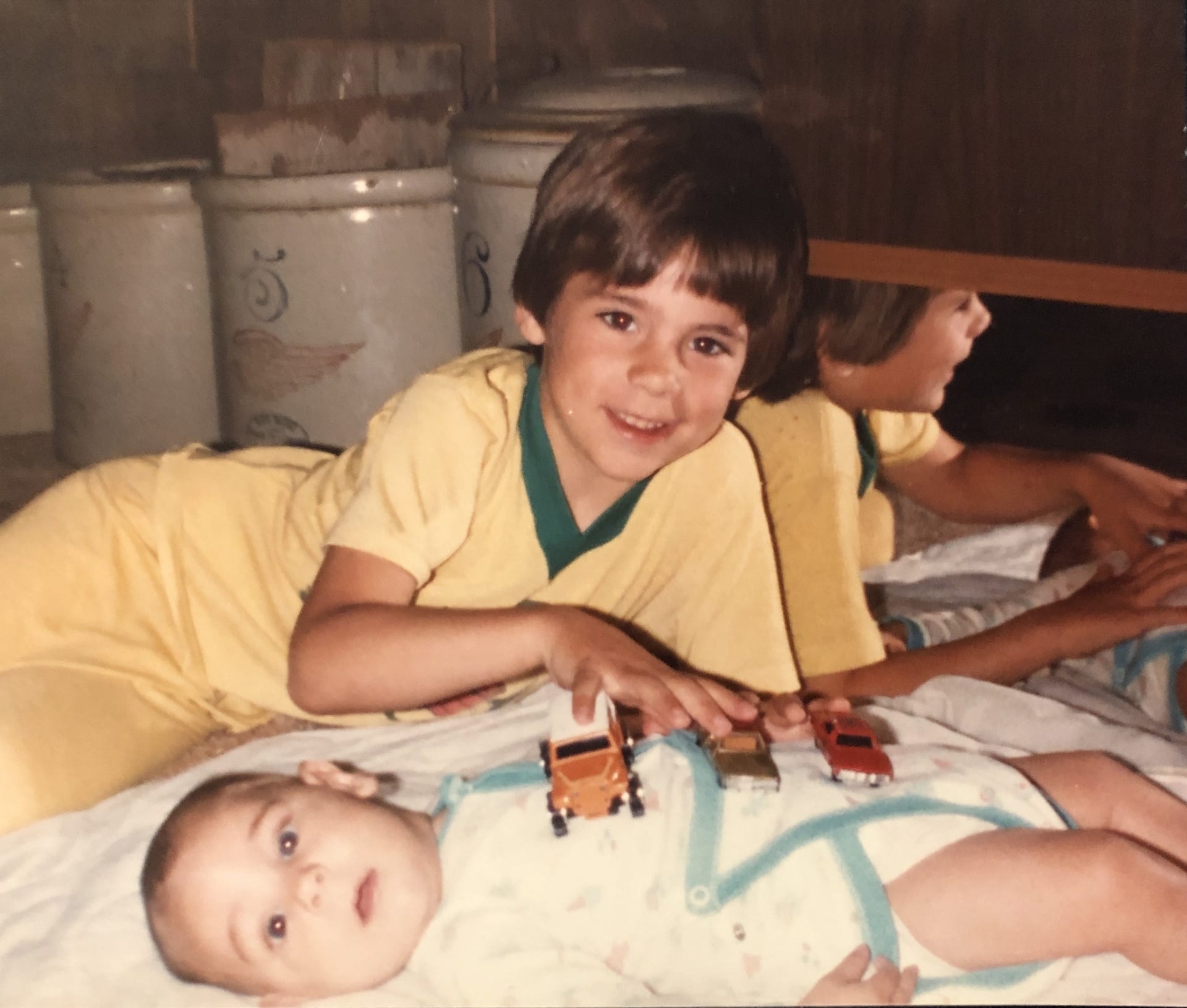
Observing Parallels in Sports
The technical aspects, sort of.
The technical aspects, yes, and maybe not in some cases.
I watch sports in the same way; I may not know what’s happening at all times, but I have a deep appreciation for the production. The way my brain worked was, if you don’t like that [dad’s radio], then find something you do like about it [the production].
I liked the way the radio host handled callers, and how he’d greet them, or the employment of a certain cadence. I admired the radio host’s ability to handle a conversation, and supply and keep the flow; if the caller started stumbling, how to get them back on their feet.
What I was doing, without realizing it, was studying the art of broadcasting, just due to the massive amount of time I was spending with my father in his car, being punished, because I was addicted to video games.
You can see how this is starting to stack up, a bit.
Mm-hmm.
My parents suggested to get more involved in things so I wouldn’t get in trouble continuously. I took up debate, and love it. Still one of my favorite things. After high school I stuck with debate, and I ended up coaching and judging debate for about 4 or 5 years. I did Policy debate; there’s two types of debate schools practice; Policy and Lincoln-Douglas. One is evidence-based, the other is more almost philosophical in nature.
Policy debate was almost like a public performance. Being able to state your case, obtain passion about your argument, and convince someone that what you’re saying is right, along with the evidence.
You’ve got public performance, broadcasting, this computer stuff… so, I’m almost to the part which bridges the gap.
There’s one other epiphany that happens, and that’s when I discovered the internet.
Yes, I had played DOOM and Quake, I was actively involved in no-modem LANs, but I discovered something called MUDs [multi-user dungeon games]. MUDs grew to popularity, for me, probably from ’92-’95, and well into even ’97. Most MUDs are fantasy-based; I played two, that were focused around deathmatch. One of them was called Rogue, the other was called Tron. Another called Genocide.
Imagine, hundreds of people, dropped into a virtual text arena, and then running around. Say I wanted to move 9 rooms to the east [E], I’d have to type, on my keyboard pressing these keys:
E
ENTER
E
ENTER
E
ENTER
E
ENTER
E
ENTER
E
ENTER
E
ENTER
E
ENTER
E
ENTER
…or if I wanted to pick something up, I’d have to create an alias, like:
pu GOLD…or something, where you created your own efficiency. It was sort of like the Matrix. It was something where people would look over my shoulder while playing and think:
“What in the actual living fuck are you playing?”
[smiles]
To me, I was in this incredibly deadlock speed-based deathmatch that eventually ended up becoming Quake, these sort of games. I played the ever-living shit out of these games.
Again, reinforcing the idea, there’s something about competition against other people that there is nothing else like it. This was my calling.
From there I went to college and admittedly, put it on the back burner. I tell people that I majored in Tekken 2 in college. Loved Tekken 2. I was the room everyone went to, if you thought you were good at Tekken, and you wanted someone to show you that you were not. I love that game, played the shit out of it at home. I remember I had to have the Hong Kong version [1995] because the US version [1996] wasn’t out yet.
I continued to do a lot of internet-based stuff, around the same time the internet started becoming graphical. We were all playing more games, there were Quake 2 servers, and when I had my first house with 5 people.
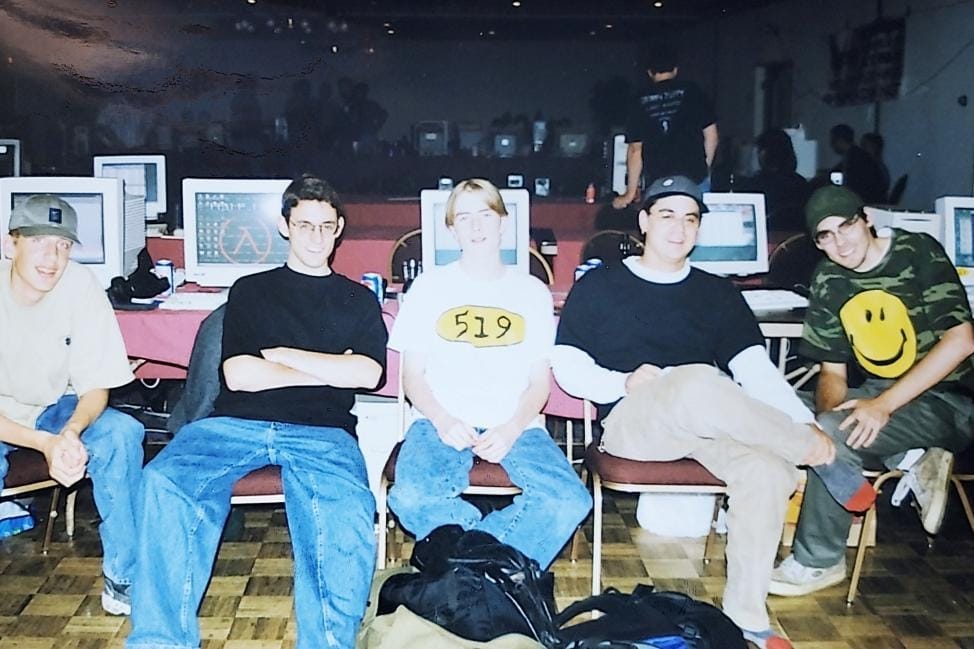
Those 5 people in that house eventually became Clan 519, where my esports life was born.
He went by Styles519, a random nickname with the clan tag attached as homage. After qualifying for an international Quake tournament, the group anonymized themselves and broke off from their 519-based names—which is where djWHEAT came from.
A hobbyist disc jockey, growing up in the nation’s wheat production hub. It stuck.
519 is when Marcus realized there was something larger happening. He dropped out and took an IT job—perfect timing and dumb luck converging into what would become the first real stepping stone.
The College Experience
What did you major in?
I majored in computer engineering and computer science, but I also was taking courses in broadcasting because I was very interested in that aspect of it. I was less convinced that I would ever get a job on radio, and more convinced I’d do something career-wise that had to do with computers. Again, it was interesting, so I knew that the campus had a radio station, but I only stuck with it for a year. That same year, RealAudio came out. Let me confirm that…
[mentally rechecks date]
Yeah, 1995. The player was released a bit later, where you could physically go into the BestBuy and purchase an actual audio player. I discovered this and I think that’s where really I was like “hold the phone, dude… I still can only listen to the radio if I am within this range of where I live” and sure, there were a lot of things that were syndicated.
One of my favorite shows and radio hosts ever, Art Bell, did Coast to Coast, was syndicated nationwide. The number of shows syndicated versus locally, was even harder [to achieve].
It made me realize that radio was actually not as big of a pawn as the whole world, considering the internet was about to hit. At the time, the internet was in a phase where you’d turn on ABC and they’d be like:
[vintage announcer voice]
“The World Wide Web!
Are you on it?
Do you need an email address?
Would you shop online?”
…and people would be like “I’d never shop online, that’s crazy!”
Even that early on, and I’m not taking any credit there, but let me tell you that I was an evangelist for the internet. I was convinced the internet was going to change the world, and probably walked away from a lot of conversations where people were like “That guy is out of his fuckin’ mind!” because I would get passionate about it.
Broadcasting something to the entire world; that was voodoo magic back then.
RealAudio and RealNetworks were an epiphany moment. If I want to pursue broadcasting, why wouldn’t I pursue it on the internet? There will never be a larger audience.
Nothing gets bigger than the internet; nothing ever.
That lit a fire under my ass, and I decided that it was what I wanted to look into. I started doing my research, how to use RealAudio, and how to use this stuff. Sure enough there was a server SDK. I had a buddy named Brad during college, he works at Oculus now, and he was like:
“Hey, man, we can throw that onto a server, you can have a 25-slot server, otherwise you’ll have to pay per-slot for a server.”
So, I agreed after thinking to myself, “That’s huge, 25 people?”
Guess what? 25 people came no problem.
In the first broadcast, I realized that the skies are really the limit. Again, at one point, people thought, “Well, television is the largest thing in the world, you can’t get more exposure than television!”
Guess what? That’s not true anymore.
Someone can get worldwide exposure on the internet, and have reach that a television network even the largest ones, can’t. Very early on, it started to spider out.
I was reading books like Neuromancer, where these concepts were being discussed. Suddenly, the university’s intranets opened up and everything was shell-based and text-based. There was no doubt in my mind, when people have asked me about esports, and I was the crazy guy that said “No, you watch, one day esports will be fucking massive.”
It was the same stuff with the internet. They knew the internet was the future; I would have put my life on the line that we were never going to be able to reach a larger audience than through the internet.
The other side of it was that I was a poor college student, and I wasn’t able to buy myself a radio console or microphone. I could DIY some shit for $29 at RadioShack, and that was super appealing.


College Days
Even the grandest journeys start from something small. A tight-knit core, no different from family at this point, of friends in college coming together to play video games. Long before esports was a common term.
It was a different time. RuneScape was more than half a decade away, Neopets wouldn’t exist for four more years, Pokémon was still a few months from existing. Friends was the top sitcom, and Mariah Carey was on top of the music world with a Boyz II Men collab.
This era represented the adolescence of modern gaming. Developers cared more about whether the game felt right than whether the numbers worked out.
No rules yet. Just hunger and ego and dial-up.
Marcus saw an opportunity:
It was all great, and I thought, ”Ok, now I want to do this with esports.”
Part II: Nitty Gritty
Stuck at a crossroads, Marcus decides his future and establishes a second family of gaming buddies, dubbed 519.
Heading into the new millennium, Marcus hit a familiar fork in the road. Do the sensible thing after college, take the 9-to-5, let the years stack up. Or take the strange offer: real money for work that didn’t look like work to anyone who wasn’t paying attention.
He took the bank job. That’s where it clicked.
He’d come home, unwind, and do it again—over and over—until “unwinding” started to look a lot like training.
Committing to a craft he believed in before there was a clean path for it, before there were job titles that made it sound respectable. Fellow 519ers nudged him toward taking it seriously. He finally took the dive.
In time, that decision hardened into something real: his own show, built with a familiar face we all know and love.
So for someone coming out of college, reading this, they’re going to wonder which path to take; all-in on broadcasting and gaming [or whatever field their dream is in], or secure a 9-5.
I didn’t finish college. That is not a recommendation I would make to others. Let me explain how I approached and came to that situation.
I feel in life that I have gotten very lucky. My parents got me a computer, I had a family that introduced me to video games. You can say all these things were little cosmic pots of gold that kind of let me to be where I was at.
I believe this one might be the biggest one I’m about to tell you.
In 1997, during my second year at the university, I worked at the university computer store and took a job at a place called Computer Renaissance. It was at that point where I just didn’t feel like I was learning what I wanted to learn in college, and I ended up getting an offer because Y2K [the year 2000] was rapidly approaching, and suddenly all of these banking companies were looking for “sharp, young, and knowledgeable computer guys and gals” who could convert entire networks, and pull 10-base T, and set up legitimate Windows networks that would interface with the bank’s proprietary software, right?
Imagine, I’m two and a half years through school and this company comes to me and is like, “Hey, you want this $60,000/year job? You work 5 days a week and do some travel, and learn this stuff, and we’ll pay for your MCSE training also.”
I was like “Fuck. Yes.”
It’s like hitting the lottery.
It’s like hitting the lottery, and it was only because of Y2K, and we’re not going to have another one, so I just got lucky.
I loved this job, I was on the help desk for a year, then I ran that help desk because I loved it so much that I still worked on the help desk and joined the server team following that. We did deployments of entire networks at banks, and I worked with these 20 guys and gals that basically filled in all my knowledge gaps which I didn’t have filled, and they were helping me understand concepts of networking I wasn’t introduced to, and helped me set things up for testing I didn’t know how to. I was a sponge, and this was the perfect job.
This also allowed me, with a 9-5 job, to then use this now sort of injection of money I’d been getting, and I would buy computers and buy better equipment. I would pay for more DSL’s to my house so I could have more bandwidth, and broadcast at higher bit rates, so that’s how my route went.
What I say to everyone who hasn’t gotten to that point yet, or is in school right now, is, “No, man.” [don’t drop out]
College offers a really interesting opportunity for people to experiment. To not only focus on the school work, but to also find out what you truly are passionate about, and what you want to spend the rest of your life doing, and exploring different things. That should be something everyone does, because you’re less likely to come across that aforementioned cosmic pot of gold. The job I secured set me up to not need an education; I still have enough experience to this day, from that company, that I feel confident I could still go get an IT job today. I really, really do believe that.
I don’t regret not finishing school, but I do know that there was a period still in my life where I was still in that early esports phase, where I know it affected me. I know some people wouldn’t take me seriously because even though I had 7 years, reputable years, at this computer company. It’s my advice to many.
Making Bread with djWHEAT
Where does that bring you in your life? What’s your mental space like at this point in time? You have 7 years of experience so far.
I worked under a manager named Dayle, she taught me an awful lot about the corporate world and how to succeed in that environment. A great manager. I loved to work; there’s a certain sense of accomplishment that you get. It wasn’t hard to be a model employee a lot of times, but what ultimately made me leave, and this might be a real fast forward, but while all this was happening, that’s when I was still playing Quake 3 professionally.
I started just saying to myself, “I don’t have as much time to play Quake because of this job,” and I didn’t want to stop being involved with Quake and involved with 519, and involved with the community, and that’s when I decided that I’m going to start looking at all of this from the broadcasting side.
The original story was that I was recording commentary only for our team, to tell them when they fucked up. I would watch their demos and record over them.
[example cast]
You guys, quad is supposed to spawn in 20 seconds.
Gator spammed everything but no one was even close to where they were supposed to be even on DM6 when quad spawned.
Look, they grabbed it, they got 9 frags after it.
You’re all fuckin’ terrible!
God damn it, this better not happen next week!
It all evolved from there, until someone suggested that get a microphone and do it live.
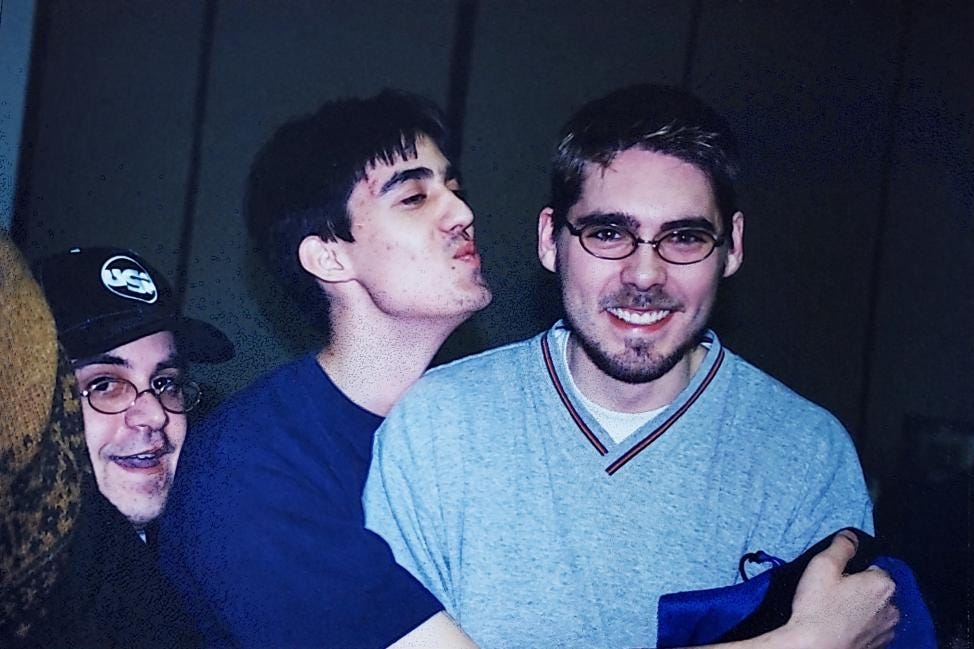
Who was that someone?
I’ve narrowed it down to two people. I believe that it was either RDW519 or airdave519.
It was during our meetings on Roger Wilco [software], and dude… we were a nerdy group, because many of us were local. Not only did we have our team, but we had the clan groupies. Not in a female sexual way, but just literally people wanting to play with us, that were local and wanting to get better.
Which was cool, I love that.
The Group
Touch on how 519 [pronounced ‘five-nineteen’ not ‘five-one-nine’] came together. You’ve repped them religiously for two decades; that’s the group, right?
It is the group, yeah.
[laughs]
It started in that gamer house in college that I mentioned. It was 519 North 35th Street. 519 was just the house number, man. It was just that silly. We always talked about not wanting to be the “Dragonslayers” or something, so we just started going as 519. It started as the original 5 people in the house. We would all tag up, join a server, fuck some people up, and I’d like to think that we were pretty good.
Then people would say we were good, they wanted to join which led to tryouts, then we’d try to have people local. All 519 really represented was a bunch of guys that just wanted to have a good time, and happened to be pretty good at games. I think that, right now, in our ranks, some of the greatest Quake 3 players will still identify with 519.
That means a lot to me, right? They didn’t live in that house, but that number transcended the house. It represented a sense of brotherhood, and a sense of camaraderie, and a sense of striving to improve.
We did some things other teams hadn’t done; we won a trip to compete at LAN Arena [Paris, France], where we got our asses handed to us by the Europeans.
It’s a really special legacy to me, because not only is it the place where I did my first broadcast [at the house], or the place where I spent my Ultima Online years; what I’m most proud of is that I went, and did Quake Con this past year [2019], and John ‘zero4’ Hill, he was not on 519 first but he ended up 519, and still identifies with it.
Even two decades later, 20 years later, it’s kind of amazing that this little thing that started in a house in Lincoln, Nebraska, still has a part of history in esports. In other games, there’s still 519, you may see it as VXIX; if we couldn’t put numbers in, we’d replace it with Roman numerals.


519 would be the origin of this second-family mentality; something with more texture to it. Marcus became more adamant about following his dream, still unsure himself of what exactly that was, and letting nothing stop him.
Broadcasting was always on the back burner. Something he had a penchant for, but never invested time into past listening to a car radio—until a fellow 519er suggested taking the craft more seriously, and seeing where it could go.
Where’s that bring you broadcasting-wise? Let’s rewind.
Sure, so going back to my first broadcast, that’s when I was like, “Oh shit, people will listen, and this is where I can unleash my passion.”
So, that’s what I’d do.
I’d come home from my job, 8-5, broadcast Quake for 3 or 4 hours. We left RealAudio at this point for ShoutCast, and I’d just do that over and over and over again. What I realized, at that point, is that it was not very smart for me to do it on my own when there were other groups out there who were already kind of creating these networks to become the home of what this thing was.
What I started doing, was I started looking for a network where I could take my Quake commentary to. That ended up being TSN [Teams Sportscast Network]. One of the more famous stories about me and TSN is that…
[recollects]
I didn’t realize at that time that I didn’t have talent; I just thought I was a guy yelling into a microphone yelling about Quake.
People were telling me I had a knack; let me tell you, one of the most nervous times I was in my career was applying to TSN. They had a level of polish and professionalism that I was not necessarily putting myself up to those standards. I could say whatever the fuck I wanted, and do whatever the fuck I wanted, because there were no ToS strikes or whatever… but I needed to show these people that I can be a good contribution to the network.
[laughs]
Man. I fuckin’ lied out of my ass on this application.
I just wanted them to listen to my recording; if they listened in my mind, they’d be sold. Claims of going to local LANs, doing coverage there, and and then attaching samples claiming I had been doing it for a year or longer were my approach.
I would have done anything, because I needed to get to the next step.
A stepping stone, sort of.
At the time I didn’t know it, but it was a necessary step, for sure.
[reflects]
I got in.
I was their Quake person, and befriended a guy named Chad Bud, AKA Blanks. This guy would be integral to my growth within TSN. He had a lot of radio experience; he still to this day, has one of the most buttery radio voices I have ever heard. He was a muse, motivator, and inspiration. He helped me become better and find motivation. He pushed me to become the best commentator I could be, alongside others in TSN. He helped me develop some of the earliest talent. Trillian, Deeya, Syn, Lun, Quake 3 casters of old.
[recollects and shakes his head in thought of everything that’s happened throughout the years]
As I’m recounting this, it’s just so much.
The Birth of Inside The Game
It’s a rush, isn’t it?
[laughs]
I’m trying to get to the point where I left this job; I ended up leaving TSN and starting my own station because I didn’t necessarily agree with how they were running the station [TSN] and their own aspirations, and how they wanted to run it.
Everything that happened; I also attribute my success in esports to this time period; I tried to be a visionary, per se, but was blocked by someone with a different vision. I refused to let that dictate my ability to succeed or not. I left that network, I took about a third of their staff (those who agreed), and I essentially said that I believed that this was the best course of action and I wanted them to come along with me for the ride if they were willing to. Otherwise, I was going to do it regardless.
That’s when we started Inside The Game, radio ITG.
…and so, ITG was born. The first real chance to build something that belonged to him.
The migration toward ITG wasn’t just a logo and a URL. It meant bringing people with him: top-tier analysts, casters, and the kinds of scene fixtures who didn’t move unless they believed the floor was solid.
For Marcus, it was simpler than eras. It was leverage.
It also wasn’t easy. In the U.S., broadcast outfits were still sprouting and fighting for oxygen. In South Korea, the ecosystem was already alive, crowded, and moving at speed. If you wanted the upper hand, you didn’t learn it from the outside.
Marcus understood that. He needed proximity to the source. If the price of admission was sixteen hours in the air, cramped knees, bad coffee, and a stubborn kind of faith, he was more than willing to pay it.
Part III: Realization
A life-changing trip to Korea, hair drapes, the creation of ITG, and the worst (best) tournament no one remembers.
The Birth of ITG
Marcus took a trip to Daejeon, South Korea in 2002 for the World Cyber Games. This came before ITG existed.
It was the first large clash between him and TSN [Teams Sportscast Network]; he pushed back and wouldn’t take No. on attending. TSN became a driving force early in his career, despite the fallout.
The South Korean esports scene was opaque to the West during the early 2000’s, for two reasons: language barrier, and distance. Almost nobody stateside could speak Korean, and a 12-hour plane ride kept everyone else out. They held what was seemingly the secret formula to esports, though; a well-structured scene with tournament atmosphere far beyond what the West was familiar with.
He studied Korea’s esport culture, structure, and execution firsthand, then used what he learned as the blueprints for ITG two years later.
For everyone involved, Marcus especially, ITG was not merely a pivot from TSN—it was conviction made operational. An all-in decision; it was either going to be successful or dead on arrival.
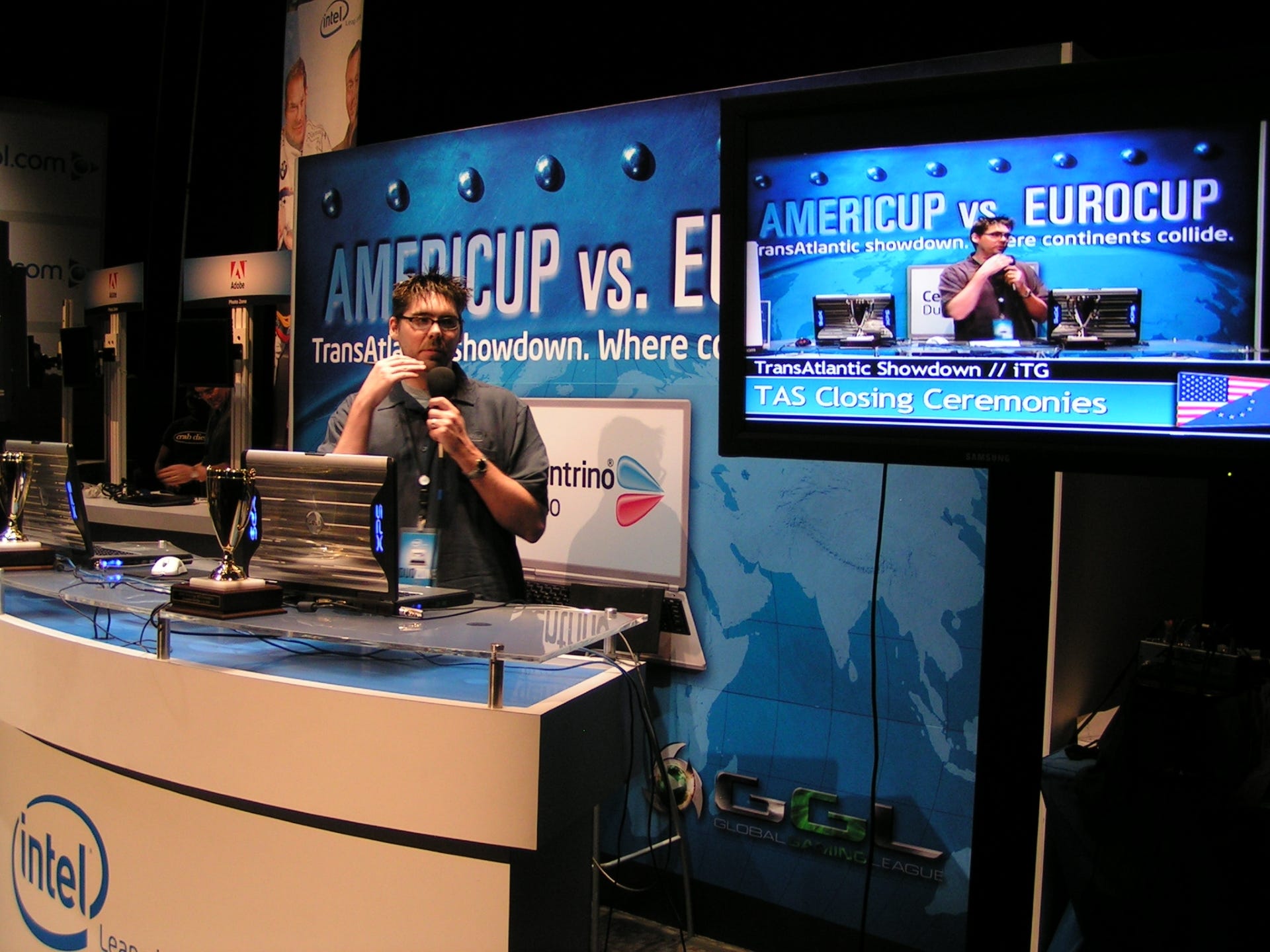
ITG, that was late 2003, maybe early 2004?
It was 2003 or 2004, yeah.
Around that era, 2002, you went to South Korea during the World Cyber Games.
For sure; that was one of the problems with me and TSN.
Expand on that.
TSN was trying to build a network, not individual talent. They had a really large problem that I was growing as a talent beyond that network.
They wanted to contain you.
They wanted to contain me, and I went against them, at risk of being fired, because the World Cyber Games reached out to me after Quake Con 2002, and said they loved my Quake commentary. Would I be up for Unreal Tournament? And I was like “fuck yeah, 100%” and they flew me out to Korea. They didn’t pay me anything, but I was in.
Well, TSN didn’t like that. They thought it only made sense if they brought the whole network over, and covered the entire event. I won’t name drop, but I notified a certain person that I did not agree with them, and that I would not give up this opportunity to go to Korea. It was a dream come true; I can’t give it up. If that means that they had to fire me or get rid of me, so be it. I ended up doing a post-WCG wrap-up show that became very famous. I realized two things. First and foremost, I wasn’t going to let a company contain me if I did have talent, and number two, I wanted to foster talent like me.
If someone was on my network and just blew up and became the next big thing for this game or that game, then that’s success. That is fuckin’ crazy successful, and to be able to share that victory… I just didn’t agree with TSN’s philosophies of growing network versus talent. I ended up taking all of that talent.
I took Tosspot, I took Tasteless. All the people; I told them they all have talent, and we can build us all up.
It’s about us, it’s about the players, and what we’re doing to help shape this industry.
In 2002, WCG was the peak of all video game competition.
100%.
Would you say at that point, from TSN to WCG, you considered this to be a lifelong journey, something you could look at as a real long-term career?
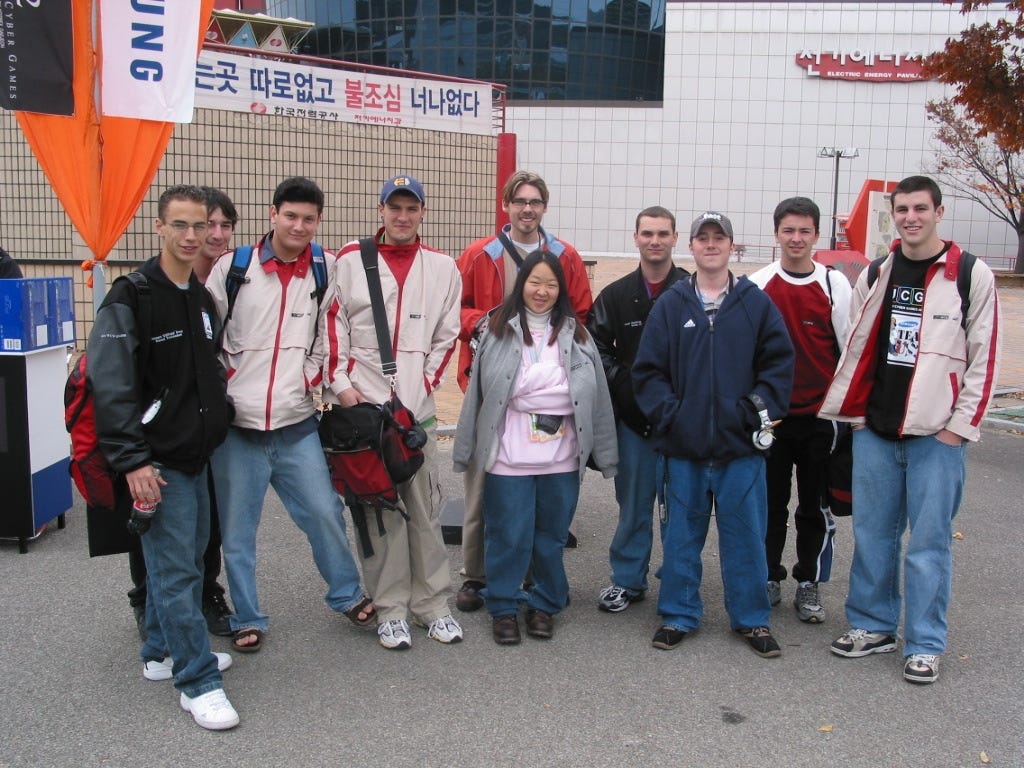
Let me tell you something. That trip to Daejon, South Korea, was one of those life-changing moments.
The Trip to Korea
That was peak Brood War as well. BoxeR beat YellOw in the Grand Finals.
100%.
Imagine a white kid, from Omaha, Nebraska of all places, getting this opportunity to go to Daejon, South Korea, to provide live commentary.
That was fuckin’ amazing.
I knew of StarCraft, I knew of the culture, but I got to experience it first-hand.
I saw an auditorium full of 5,000 people, go ape shit, with BoxeR playing YellOw in the grand finals that year, too.
That was life changing, because when I was done [with commentary], I went and watched other games’ finals. I realized something while doing that, though.
I thought, “I am such a bitch,” because in gaming you are a Nintendo kid or a Sega kid, and up to that point, I was like “I’m Quake for life! I’m going to cast this game forever!”
Well, look at the status quo. Look at where I would be if Quake was going to be the game that I would have cast for the rest of my life.
[thinks for a second]
One of the hardest thing to deal with in the world of esports is the constant trolls and insults of, “Yeah, djWHEAT chases the dollar, he doesn’t care about the games,” it’s like, no, dude.
I care about them so much, I was willing to learn every game I possibly could. I went home and learned how to cast Counter-Strike; I embedded myself in that game. I learned everything I could about Warcraft III, because that was just released. I would cast every single mod people for Quake. No longer would I be a snooty Quake commentator; I wanted to be an esport commentator.
For anyone wanting to get into the world of esports, you better be keeping an eye on every game; I would never put all my money into one game again, ever.
It was there that Marcus stopped thinking about one game. The map was bigger than that.
This wasn’t just video games or esports. It was an untapped engine in the East, running at full speed, and the West barely had a doorway into it.


Would you consider yourself a broadcaster and commentator, that just so happens to cast esports? Or rather, someone from esports, that broadcasts and commentates. For instance, could you see yourself casting an NFL game? An NBA game?
At one point I was really into UFC, and thought I could commentate it, but at the end of the day when I thought about it… the reason I have been successful as a broadcaster, is because video games genuinely excite me.
You go back and watch every StarCraft match, every Quake match, every Counter-Strike match… that’s genuine excitement over what I am seeing. A lot of times people dismiss it as fake, but that’s really why I’ve been successful. When those games start, the world around me closes, and all I can think about is that someone is controlling this [the game mechanics] at a masterful level, and I am getting the opportunity to cast this, and I think about the importance of that to other people.
That was my adrenaline, my drug, for so many years.
I don’t know where that answer falls in what you asked me, because I was involved in esports for so many years where it wasn’t even called esports; it was just…
It was just gaming; they tried throwing labels and buzzwords at it for a few years there. Competitive gaming, cyber athletes, the lot.
Right, exactly.
So you come back from Korea, coming off of the WCG. Being a competitive person, are you wanting to keep pushing to a higher level or are you satisfied with what’s just taken place at that point?
At that point, it became more so of attaining that level, and questions arose immediately.
“How do we reach that level?”
“How do we become Korea [in terms of esports]?”
“How do we educate people and create awareness that this is a thing, and people should care about it?”


By 2001, South Korea’s game industry had traction: broadband buildout, PC bangs, and chaebol capital turning play into business.
Then the hits landed—Ragnarok Online (2002), MapleStory (2003)—and “gaming” stopped being a niche you had to explain. It was mainstream, and it moved fast.
Brood War was already filling arenas. Lim Yo-hwan (BoxeR) was becoming something esports rarely produces: a household name.
Two years later came a full-length DVD feature. The year after that, an autobiography: Crazy As Me.
In it, KeSPA president Kim Yungman puts it plainly:
E-Sports, with the representation of Starcraft, has increasingly expanded its territory and created at least 200,000 related occupations, completely rejuvenating the related industries.
Moreover, it has had extensive effects socially, economically, and culturally, enough for professional gaming to be the youth’s most desired occupation. The person who has played a crucial role in intensifying such love for Starcraft is the progamer Lim Yohwan [sic].
Championships multiplied. Top players drifted into near-mainstream celebrity on exposure alone. TV time, packed venues, a region built for it.
From the outside, the numbers looked implausible. By 2005, the game industry was worth multi-billions. This wasn’t “fun tech” anymore.
Marcus saw the angle: get close early, then translate that energy into coverage that treated esports like the real thing.
That’s where the GGL (Global Gaming League) era begins.


During all of this, the GGL era is happening, right?
Right, I was just about to get into that.
So following TSN and WCG, the GGL era was starting up.
GGL ended up hiring ITG to do a bunch of their events, and we met with them. We did Gravity Games. We met with them some more at ESWC, and I was sitting on a hill, literally, watching a concert after ESWC 2004, and Bret Hawkins from GGL was there. He came up to me and asked if I would move to Los Angeles and come work for him.
“Shit man, I’ll have to think about that one. What about ITG?”
He said he wanted to purchase ITG, as a whole, and make it so when we went to events, he’d be paying us. He wanted broadcast development. He wanted to keep the esports thing going.
What I saw in that was opportunity; up until that point, I kept asking how we could make this movement larger. The stuff aforementioned. This seemed to be the way to go about doing that.
I said yes in October of 2004, and in January of 2005, me, my wife, and our three cats were on our way to Los Angeles.
Who was on the active roster, of ITG?
Blankz
sin
lune
Allison “Trillian” Suttles
Travis “trav” Carrero
Stuart “TosspoT” Saw
Paul “ReDeYe” Chaloner
Jeff “smeagol” Dickinson
Nick “Tasteless” Plott
Christopher “MonteCristo” Mykles
Tres “stunna” Saranthus
What year does this bring you to, with the acquisition? Where does Rod [Breslau] come into play?
I don’t even fuckin’ remember where I met Rod.
[grins and laughs]
When was it, dude? I mean, it had to be…
It was definitely at a Quake Con or something. During the GGL era, though, yes. I remember him leaving that era, in 2009.
Let’s touch on the gap between 2005, which is when you were in Los Angeles, and then leading into the disaster we all know as the CGS. Anything that hasn’t already been said?
So, CGS and GGL overlapped. I did a lot of stuff; HHGL, that’s when we were doing the Gravity Games in 2006.
Dude, I casted Quake 3, and this was in 2006, I casted Quake 3 in front of 50,000 people in Cleveland, right before Jane’s Addiction came on. How fuckin’ ridiculous is that?
That same night, I met Randy “Macho Man” Savage backstage; I was just sitting there wondering if it was real life.
It didn’t feel real.
100%.
It just really, really… a lot happened.
For me, GGL era was an experimental era. There was a lot of things which I did not agree with but they let me do whatever I wanted, including experiment with things like video broadcasting. We can’t forget that’s where I founded Epileptic Gaming.
I challenge anyone to find me another daily video game show that was live streamed over the internet at that time; I truly believe I was the first one, alongside Rance Costa, Hogan Carter, and Robert Summa to do it.
The EG Days!
Yes, I have a VOD somewhere talking about it all, but that’s basically the gist of it. We were doing audio a little while before the video broadcasts.


The Hip-Hop Gaming League
No one could predict what came next: a video game tournament hosted by Snoop Dogg, built to fuse hip-hop with gaming.
On paper, it read like two outcomes and nothing in between. Either it collapses under its own ambition, or it lands so hard it becomes myth.
The Hip-Hop Gaming League.
The best tournament to ever exist, and the one almost nobody remembers.
You hosted HHGL with Snoop Dogg, and you knew nothing about hip-hop.
Yeah, the only thing I knew about Snoop Dogg at that time was a few of his songs, and I knew that he liked to smoke a lot of weed, so we have a couple things in common, right on!
[laughs]
So, imagine this. I played a role at GGL similar to a role I play at Twitch today; they know that if they were to throw me into a situation, that I will handle it professionally, and with grace, and to the best of my ability. That’s what I did. I let those guys [the hip-hop artists] be the stars, I tee’d up the right questions, and you know I don’t even really know how I ended up with that role.
That was a really wild tournament, we need to bring that back in some form.
I know, I know.
It was wild and it was so incredibly ahead of its time.
It was seeing into the future, just the premise, it was hilarious.
Can you imagine, for 10 weeks on Twitch, starting next week, the largest hip-hop artists in the world are going to be playing games of their choice on their own Twitch channels, culminating in a huge finals with a hip-hop concert? That would be one of the most awesome and hilarious things to ever take place on Twitch.
I think it was just the interviews being so terrible along with the artists being sky high [on weed] the whole time, it just made it so good.
I was in a world where it was just great, I mean the people were so passionate about this, no doubt about it. At least that was common ground, you know? People are stoked about the video games, people were cheering, granted they were sports games, but that’s fine. It’s fine, because people got it. For that afternoon, people got it. For those 9 weeks, they got it.
I got to spend a fair amount of time with Snoop Dogg, and believe it or not, I learned a lot from that guy. So, Snoop Dogg was the commissioner. He didn’t actually play; he had two jobs. The first was to visit the studio, and shoot two hours of footage for the HHGL. The second job was to show up at the finals and be a part of it. Well, he was really into it. I think it was one of those cases where he signed the deal and agreed to be a part of it, then realized “oh shit, this is fuckin’ dope, I want to be part of this more” so he was integrated more than what was required, which was awesome.
Watching Snoop Dogg basically improv a bunch of promos for two hours, was fascinating. He made people laugh, he’d take breaks and get people involved, and there was a lot that I took away from that day.
When I’m around people I admire, I try to take away everything that I possibly can. That’s truly how we can improve in our own passions and just as humans.
It was an amazing experience, plus how many people can say they shared a stage with Snoop Dogg?
Sure, but did you share a blunt with Snoop?
[grinning with a short pause, laughing quietly]
Yes.
So we have that on record now.
[grinning]
Basically what happened was, Snoop and the about 9 folks that Snoop rolled with, they had a room that was quite small.
Well, the time came where I had to notify them that I was the host, and let them know the run down of how it was going to happen live. Of course, I go into the room, and I have to like, do one of these [motions with hands as if he’s swimming through water, alluding to the room being hotboxed] and the first thing I hear is:
“You smoke?”
[looks left and right, then leans in]
“Well, this is going to be a much better meeting now!”
I did, right? No big deal, I can handle my blunts. So, I got a chance. Puff, puff, pass, thank you so much, cool, didn’t ask again.
That is a situation where you are offered, but do not ask.
A lifetime achievement.
It kind of is, it kind of is…
[recollects while vaping]
Then the internet sped up again.
Part IV: Leap of Faith
Marcus takes the leap and goes all in on esports, betting that this thing can be a real career. The only question left is whether it holds, or breaks him first.
The Championship Gaming Series failed fast.
If it has a silver lining, it’s this: when it collapsed, it left behind rubble that people could climb.


That brings us back to CGS, with HHGL wrapping up. Perhaps the worst crumbling of a large scale video game tournament ever.
CGS had a history in and of itself; it was piloted originally as the Championship Gaming Invitational, not Series. What that taught a very intelligent team, is that just because it’s a video game and just because you can put it to tape, doesn’t mean it’s any easier for workload.
The early philosophy at CGS was, taping three weekends with 20 shows, but failed to realize that it was done best live. Some games, easy to demonstrate that, while others more difficult, but it didn’t take long for Mike Burks, who had experience with the Super Bowl, with the Olympics, with Thursday Night Football. He was one of the first people to say that we couldn’t do it pre-recorded; it had to be live.
CGI happened twice; two pilots. That was a way to figure out how to make it a live league, that happened twice a week, for 8-10 weeks.I had a very important phone call with Jason Lake, you know who he is; he was part of CGS at that time, and he ran that one team named LA Complexity for the CGS.
I spoke to Jason and he just asked me what I was going to do, and I told him I was unsure, but I was going to do the one thing I knew I had to do, which was leave Los Angeles because I couldn’t afford it.
No one was hiring game commentators, right? It wasn’t like esports was blowing up.
I spoke to G4, they weren’t looking for anyone. I was exhausted, and remembering that being an extremely stressful 2 months on my mental psyche; I was hustlin’, man. It was a ticking time bomb.
Find something, or move back to Nebraska, because you can’t support your 4-year-old kid or wife out here, or yourself [himself], right?
I’m really glad that it didn’t. I went back to Nebraska, and luckily my wife and I had bought a house back in 2003, and we just happened to still own it, because if you remember the housing market was really shitty during that game, so yet another lucky thing to happen. If I had sold that house, I don’t know where I would have moved back to. Being able to move back into an affordable place, there was comfort in that.
I’m going to tell you a couple of things I don’t think I’ve ever told anyone.
I had to take unemployment, no shame in that. I had to support my family; my wife went to work at the family restaurant, and she actually enjoyed that, and that was right next to the daycare, so it gave me kind of time to figure out what the hell I was going to do. I was looking for jobs, and I had reached out to some of my old contacts.
“Hey, I’m back in town, if anything comes up, let me know.”
I was unemployed from January until March [2009]. What that allowed me to do, was in February of 2009, I went to my community and I said to them, “Hey, I know you love EG [Epileptic Gaming], I know you love the other shows we used to do, and I really, really really, want to do this. I really would like to try and make this what I do full-time. Things are changing, CGS failed, yeah no more GGL.”
I don’t think Justin was public with it [Justin.tv’s rebrand] quite yet, not completely embracing the gaming part yet. So, I basically was like hey, if I can raise this much money, I’m going to start up all these shows, I’m going to create djWHEAT.tv, and from the community which I had been creating through esports and EG, I raised almost $5,000.
A lot of money.
For 2009? Hell yeah, man. That’s a lot of money.
That’s like a large prize pool at an esports tournament back then. Even more, probably.
I remember being incredibly humbled at that moment, and honestly, I remember saying to myself “I won’t let these people down” right? I’m going to do this.
That’s when I started EG again. That’s when LiveOnThree became a thing. That’s when Weapon of Choice restarted. That’s also when Call and Brawl came back. I was doing 4 shows, obviously the flagship show was definitely EG, but as esports was starting to grow, LO3 was kicking up. I started interviewing all of the exit contestants from Ultimate Gamer. SyFy even advertised it a couple of times.
In May of 2009, I got approached by my former boss at the bank and she was spinning up a new team which was deploying cloud backups for all of the banks for the company, and they wanted me to lead the team.
I was in 100%; I needed the job, I had to support my family. That was 2009, about May.
How do you deal with hitting your peak within esports, then being forced to pick up a 9-5 yet again. Does that mess with your mental?
It’s great to be in the gaming celebrity limelight and that level of recognition, but it’s also great to have the ability to take care of your family, and still chase your dreams and support your hobbies without having to sacrifice a bunch of other stuff.
It was kind of funny, because I came back to the bank as a semi-celebrity in a way. I didn’t feel like people were looking at me as if I failed. I was still very much involved with esports and it was just another part of the narrative.
“I did this, I did that, I was on television, and it was great, but it [large success] hasn’t happened yet, so I won’t give up, but I’ll still need to leave work at 4:00 on Fridays to do EG” and it was accepted.
People I worked with knew me enough already that they knew I had gone to Korea, that I had traveled to all these different places.
A certain level of respect.
Perhaps, yeah.
How to Rebound
For those who have experienced a similar situation while attempting to achieve their dreams, what would you say? To those who deem themselves as having failed.
Well, there’s two ways to handle that.
You can either shrivel up and stop chasing your dreams, or you can reset and you can get right back to where you were. If you’ve done it once, you can do it again.
That was my philosophy. We were entering into a new era; we had Justin.tv, we had UStream, I didn’t have to pay for additional bandwidth. We have all these creatives and new ideas.
That eventually led to the creation of OneMoreGame.
OneMoreGame was more or less the same; my idea behind it was very simple. I was such an idiot I called it “djWHEAT.tv” because it made the most sense at the time, because it was just me hosting all of the shows, but then I thought… you know, I want to create something larger than me, and I can’t ever ask someone to broadcast on my network.
Imagine, “hey, come broadcast on my network, djWHEAT.tv” that was pretty fuckin’ stupid. If I had one regret in my time, it’s that.
Sure, for branding.
Right, to brand it differently.
So I created OneMoreGame.tv with SirScoots, GotShedosha, JustinMeter, Erin Hassle. It was the same stuff I was doing, but we had a regular schedule, we had someone to help us book guests, we did social [media], and eventually it got bought by Good Game Agency, which was the company that owned Evil Geniuses and Alliance as well as other esports teams, and whatever else around it.
How did you and Sean [Plott] meet each other?
I met Sean in Singapore WCG 2005, my son was just born so I was not able to go to the WCG USA Finals that year. Sean had qualified, and Tasteless was on my commentary team. I had heard stories of his brother, the legend that was Day[9].
Then I got a chance to meet him, and my first impression was “Oh my god, this guy is a real life muppet; full of energy, silly, goofy” and it didn’t take much to be like “I love this guy, he’s great” — now it wasn’t really until 2009 that we reconnected. Partially through the content he was creating through Day[9] dailies and that we were doing similar things, and with StarCraft.
I would consider him a very, very good friend at this point. 10 years later.
During that time too, yes, I had fallen back in love with StarCraft.
Hail Mary
Let’s talk about that for a second.
How I got involved with StarCraft, actually, is a funny story. I knew Day[9], and wanted to get more involved. I remember watching MLG DC, the first MLG that had StarCraft II, and I just thought about how much I missed it.
I remember emailing Ben Balboa and Sundance DiGiovanni. Before I touch on the actual email, let me preface by explaining why I thought I could send this email. As I was leaving GGL, I had two options in front of me. Work for CGS full-time, or go work for MLG in New York, and that was a hard decision. I would have loved to have worked for MLG, but I was sure that my story would be a lot different if I did.
Sundance commented on why he gave Marcus that shot:
When Marcus first reached out to us, he had already established himself as one of the most notable voices in esports. Live on 3 was the gold standard for in-depth discussion around esports, and his work with other esports entities was well known.
Having Marcus join our broadcast was essential to help us establish credibility and trust with the StarCraft 2 community as we worked to build an audience. His passion and commitment to esports was infectious and having that energy in the room made for a better event both for the viewers at home as well as for the live audience.
Things finally started to click. People noticed. MLG handed Marcus a rare shot to prove himself, and it came on one of the biggest stages esports had to offer.
A decade of experience was cashing out. Marcus wanted to walk through what the email said, and what followed after he hit Send:
I felt like I handled that situation really well, where I thanked them, and I explained to them why I made the decision that I did, and I always made a point to make sure they knew how much I respected what they were doing in the space.
I emailed them, both. Verbatim, I said:
“I love what you’re doing for StarCraft. I feel like I could bring a lot to MLG if you brought me to a competition. If you fly me out to the next event, I will work for free. I will be your commentary bitch, and I will do 15 hours of games if I have to, just to show you how serious I am about wanting to commentate at MLG.”
And there was a plane ticket waiting for me to go out.
I always tell people, sometimes you just need to take the initiative and go for it. I wouldn’t suggest giving up your hard earned time, but this was a period where you had to do that to get noticed.
Was that MLG Dallas?
I want to say it was MLG Raleigh. I think.
So, I sent that email, and that’s how I got into MLG. I owe it to MLG for giving me a shot.
That leap is what pulled Marcus out of the rut. He’d already learned to go against the grain when the grain led nowhere useful. This time, the risk stuck. The switch flipped.
In the months after MLG Dallas, the connections stopped being transactional and started becoming real. The kind that last. Sundance DiGiovanni, MLG’s founder. Justin Kan, who was still early in the long arc that began with JTV.
He also linked up with Sean “Day[9]” Plott, already a revered voice in StarCraft. They became fixtures at MLG events, their chemistry obvious and unforced. Crowds responded to it. You could feel it in the room.
Sean would later talk about the impact Marcus had on him:
Marcus is someone who I admire so much.
He’s deeply passionate and cares so much about what he’s doing. Fearless, in a calm way. A lot of times when you think of someone as fearless, it’s almost that they’re full of fervor and determination. Marcus is like “yeah, we’re gonna do it,” and he’s always very calm and poised. I don’t think I’ve ever seen him get nervous or anxious, ever. He seems absolutely unflappable. There’s this sort of fear that you think about when you have a piano recital, and you gotta stand up and play a piece.
“Ooh, I don’t want to mess up!” There’s that sort of fear, but then there’s a more basic one, which is… “Ugh, I don’t want to do this thing, this is going to be a pain in the ass.” Marcus was doing broadcasting long before there was a concept of live broadcasting. Long before a concept of it. The way he was able to do that was just say, “let’s do it and figure it out,” and how did he figure it out? Endless failure, which totally seemed not to bug him at all.
He just managed to make it all work. There were a lot of shows that he worked on which were a complete disasters, and he literally kept plowing forward, plowing ahead… and it’s one of those things where, when I first started talking to Marcus about 2009 and 2010, when I was starting my own broadcasts and it was starting to get big, I’d go to him.
What came next was the hardest assignment of his life.
Justin Kan and Kevin Lin pulled him aside and handed him something confidential. A project with a placeholder name, Zarth, built around a single, dangerous idea: pivot Justin.tv entirely toward video games.
By the numbers, it was absurd.
Gaming made up roughly 3% of JTV’s traffic. A rounding error. The kind of thing you kill quietly in a meeting. But it was also the bet no one else wanted to make, and somehow everyone in that room believed in it.
Kevin would later talk about what it took to offer Marcus the role in the first place:
He was on Ustream and I believe the biggest change to the business that happened during Twitch’s development was the number of customers we were talking to and reaching out to. Marcus was not super excited to hear from us in the beginning, I don’t think.
Understandably, because he didn’t know us; we were not good at customer-facing stuff for a super long time. Our brand was this generic brand, with little-to-no marketing around JTV. Eventually we got him [Marcus] on the phone and explained what we were trying to.
Why Marcus? Simple. In a world full of commentators, promoters, and guys with opinions, he was one of the few who’d already paid the price. He’d lived inside the ugly, unglamorous reality of broadcasting games live on the internet, back when it barely worked and nobody respectable admitted they cared.
So he said yes.
Now came the part that mattered.
Part V: Era of Twitch
By this point, he wasn’t auditioning. The climb had a price, though.
By late summer 2010, bleeding into 2011, the whispers were everywhere. Twitch was the word moving through back channels and hotel lobbies, traded between insiders who thought they understood where this thing was headed. People argued about structure, about moderation, about how it would run. Everyone had a theory.
StarCraft II had just landed, and the scene cracked open. New blood, real money, real obsession. You could feel the temperature rising.
What no one could grasp was scale. Not even close. Twitch, still hiding behind the codename Zarth, was bigger than any of the conversations circling it. The real question wasn’t whether the pivot from Justin.tv would work, but what survived the transition intact.
Kevin Lin knew one thing for sure. When he picked up the phone and called Scott Smith at an MLG event, this thing wasn’t going to be called Zarth:
I actually told him that it was going to be Zarth, which was Twitch’s project name that almost became the final name. Scott just paused on the phone and was like ‘you’re out of your f-… you’re out of your mind’ and I said I was kidding and it was going to be Twitch.
Justin and Kevin reached out to an esports personality who had become a crowd favorite during the early Starcraft II days: Marcus "djWHEAT" Graham.
Without Marcus, who knows where we [Twitch] would be. Marcus brought everything from product ideas to ultimately policy on how we handle the site. The community.
At the moment of the switch, Justin.tv had roughly one million users scattered around the world. The quiet fear wasn’t growth. It was loss. How many of those people would follow when the lights changed and the sign on the door meant something else?
That question hung over everything.
Justin would later talk about the pivot, the lull before the jump, and what it meant to go all in on video games when there was no safety net left:
I don’t even think Emmett knew that it would blow up as it did; I think it was just content that he enjoyed watching. StarCraft II had just come out and he really liked the StarCraft content. I was pro-pivoting towards it [gaming], while our other co-founders were pretty skeptical. I don’t think any of us knew this would be huge, you know? It was a learning experience for all of us. Thinking that we just built something people really liked.
Now, back to Marcus.
We arrive at 2010 when StarCraft [II] is released, you begin casting MLG tournaments, and we head into 2011. You then join Twitch at the end of 2011.
Yes, I did join in 2011, I’m actually about to celebrate my 8 years, and I was the 19th employee at Twitch.
I was not even on JTV [Justin.tv] yet. I was still on Ustream.
The beginning.
Yeah, man.
Me, Sean [Plott], Justin [Ignacio, widely-known as Gunrun], and a few others were still over there and at the time, Ustream was not hyper-focused on gaming. They said like they were going to support us and be there for us, but then they went the route of a lot of the livestream platforms at that time, which was the need to get celebrities on the platform.
Gamers ended up taking a backseat and that was an opportunity for JTV. Michael Seibel, Kevin Lin, and Emmett Shear basically did everything they could to bring myself, Sean, and Gunrun over.
They ended up hiring Justin Ignacio. That was an easy one.
I think I was the last one to come over and it wasn’t because I didn’t believe in JTV or didn’t like what they were doing. I think the act of moving everything that I was doing without knowing the certainty of the future was a little daunting to me. At the time it was myself and Scott Smith [SirScoots] and we had conversations with Kevin; we made it really clear like “Hey if we’re going to come over, you know, we’re going to have to redo graphics and do all that stuff, it’s just going to be a lot of work on us,” and he’s like “yeah, I got that, I totally understand that. However, I can help out.”
I went hard on JTV. At the time there were some issues with Zuffa and Justin TV because of some unauthorized stream rebroadcasts that were happening. One of the things I was scared about was wondering, what happens if Zuffa wins? What if I switch over, or and we all switch over, then suddenly there’s not a platform anymore? Emmett, Kevin, and even Jacob at the time, they made it clear that it wasn’t going to happen. We understood and they mentioned they had other things in the works, which would benefit the gaming community and broadcasting community as a whole.
At the time they were also starting to talk about the partnership program. That was one of the big things that everyone was looking for at the time. It’s like are we turning this hobby into something that we can sustain ourselves on.
We finally made the switch.Everything was done from audio work to graphical work and whatnot. Probably one of my favorite stories about this era was a few months later. They made the announcement that “Justin.tv” was changing to “Twitch” [rebranding].
I remember calling Kevin and being like: “Dude… You fucked us!”
[laughs and recollects]
We just spent a month changing all of our graphics and redoing all of our audio.
[recounting his sentiments, running through the conversation verbatim]
“You didn’t even tell us about this, and now we have to do it all over again? This is exactly what we didn’t want to have happened. You said that you were going to communicate with us and that you were going to look out for us.”
We were genuinely upset and and you know, I think Scoots had his conversation with Kevin, and I had my conversation with Kevin. This was also the time where I probably earned some points with JTV, and I mentioned that this wasn’t the way you handled partnerships/partners. They’d split like this.
I brought a lot of awareness to it that, making them realize it’s just more than providing some bandwidth to these gamers. Right? They wanted to create a community. They want to have a personal touch. Kevin said “I will pay for everything. I will like pay for you guys to redo your graphics and the redo everything. We will make this right.”
It was really that point where I was thinking “Holy shit. Kevin Lin, Emmett Shear, Jacob Woodward… they all really do care.”
I realized that they genuinely do care about gaming. I never got those types of phone calls from Ustream or or any other platform that I might have streamed on previously. That was a big deal that the CEO, COO, and company president were calling and having these discussions with me. It was two and a half months after Twitch became Twitch that then I joined full-time. I originally joined full time to focus on bringing as many esports teams and organizations to the platform as humanly possible.
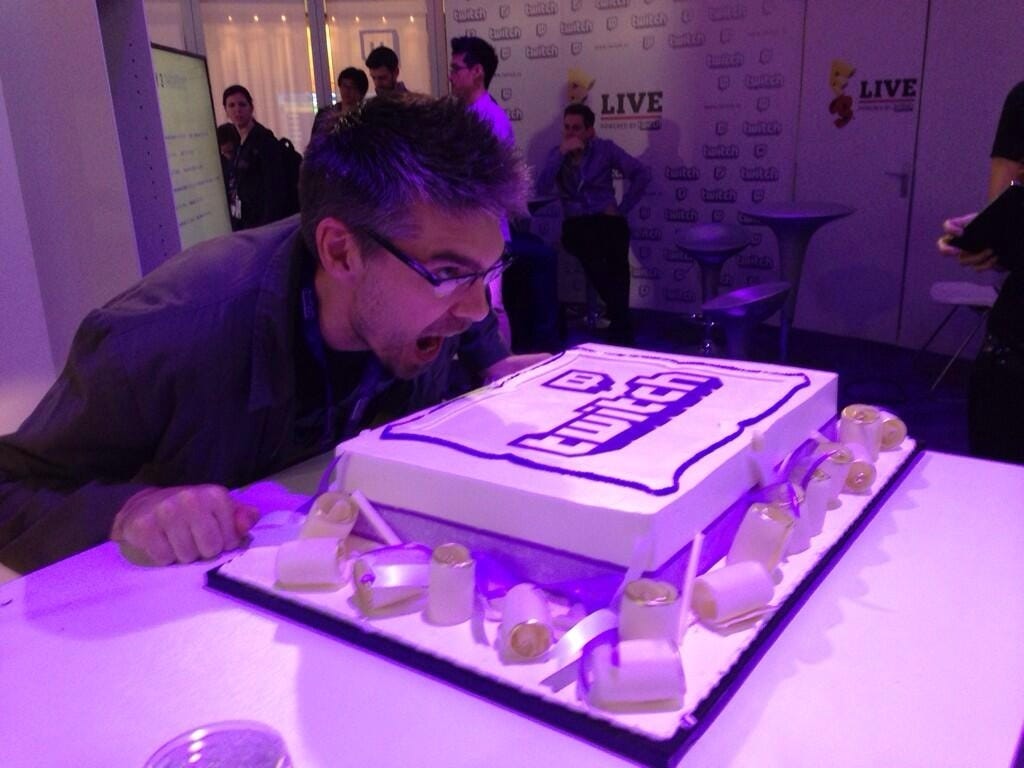
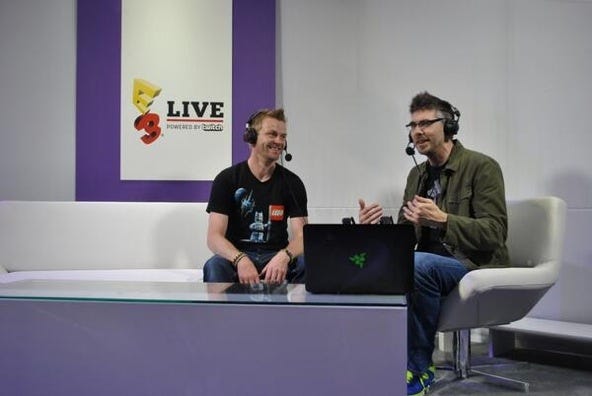
The Revival
This is right at the peak of esports being revived, right? Perhaps a year into it where you have these games coming full force with tournaments and you see a shift.
The revival, right.
You had StarCraft [II]. It was League of Legends. It was Street Fighter 4. Those three games the games in my opinion were the triad that brought esports back in 2009, but for me personally, it was also the triad that gave me content for Live On Three. It allowed me to do a lot of hosting with Riot that probably I wouldn’t have done otherwise.
Scoots [Scott Smith], myself, and a few other folks from OneMoreGame including A.J. Papa and FishStix and Gunrun did a fighting game community [FGC] event called Devastation 2009, because we wanted the fighting game scene to be seen in the same vein as other esports events as well.Sure, we didn’t realize some of the difficulties that there would be in that as we were kind of outsiders coming into it, but I think they’re also people were understood what we were trying to do and realized we that there needed to be more of that.
I mean, the FGC has done an amazing job from a streaming perspective. For us there were all of these opportunities to get OneMoreGame up, and to turn that into at least from our perspective, a revival of esports and the part that we played in that.
I remember meeting so many people there from the FGC; Aris Bakhtanians, Alex Valle, Robb Chiarini. There were a great deal of fighting game legends even at that event.
CGS collapses, you rebound, and now you’re at Twitch. In 2011, are you more confident? Still growing as a broadcaster? Do you feel like you’ve got it, and you’re climbing fast?
At that point, I had 10 years of broadcast experience. Let’s break that down.
That was almost five years of doing audio/radio style casting, starting up Epileptic Gaming started up, all of that aforementioned hosting work, getting up in front of a camera and whatnot. That also included three years of live television with CGS. That was my training ground right there, that 10 years.
I felt really comfortable in my role at Twitch and my ability, as a professional. I also had all that IT experience like I felt like I was bringing a lot to the company. Not only my background of esports in my background as a broadcaster, but also I’d managed teams before, managed budgets, and dealt with contracts as well as legal [documents]. I would say that I had a leg up on a lot of folks because I had some additional skill sets going into that.
Then, of course, I had, like, the esports Rolodex.
That was a perfect job for me. It was a different time back then, man. I remember having conversation with esports people to be like, “so you’re telling me that I should practice and stream my practice but then everyone will know how I play and the types of strategies that I use?”
It was harder than you might think, right? Getting the organizations on different esports broadcasting. That was a solid 2-3 year project.
This was also when Valve started to drip-feed insiders information about CS:GO. Pros being “secretly” flown out to Valve HQ to balance the game. Given Valve’s track record at the time, were you anticipating the tidal wave that would be CS:GO to overtake esports the way it did?
I don’t think anyone was. I still think CSGO is one of the most amazing rebounds of all time. Think about [the transition of] 1.6 to Source, that was rough? People were all:
“Fuck this game. This isn’t 1.6. It’s like the Fisher-Price version.”
So we already knew it had an uphill battle, right? People already had a pretty bad taste in their mouth with Source. What was going to be the solution to that? Bringing the pros and listening to them wasn’t an overnight change. CSGO was out and had pretty negative sentiment for a while, but doesn’t mean people didn’t play it. They had to buckle down and make it the game people wanted to play. Look at where it’s at now. Counter-Strike now has a legacy that is just completely bonkers.
[laughs and reflects briefly on its arc]
There’s not a whole lot of esports titles that can even come close to having the history or legacy that Counter-Strike has, and I do not believe that anyone was thinking, “You know what? They’re going to turn this around.”
Even at the time, Alex Garfield was developing the 1.6 ProMod for Counter-Strike was going to make it. Thank you to all the pros that finally yelled enough to actually make it happen. It’s going to be really hard to beat the rebound that was Counter-Strike it when it came [transitioned] to Global Offensive.
CSGO is an esport which is easy to spectate and understand. Other games, such as SC2, are much more complex. Do you think this contributed to the success of the revival at all?
I actually don’t think that has anything to do with it, in my opinion. There’s enough Counter-Strike fans. As long as the game was there along with competition… right?
So, I would say that the true reason for the rebound is a [the] community that has been built over 16 years that love Counter-Strike that was playing in college or playing in high school, and just needed that next version.
They got everything right from the crates to the skins to the competitions.
I don’t think it has anything to do with the ease of viewing. I think it has everything to do with the fact that you’ve got hundreds of thousands of people who had watched competitive Counter-Strike up to that point and were just ready for the next era.
Let’s talk about the acquisition of Twitch by Amazon in 2014, and what ensued between 2012 and that day.
That period was kind of where I think I started to put a bow on like my first well, I don’t even know if I’d caught the first era but… I call it the
Third Eraof esports, because I was casting SC2 pretty regularly, but then WCS started and, I think Blizzard was looking for individuals who wanted to make that their full-time job and that was not me. I was at Twitch. I was very happy and frankly that was fine with me because there were a lot of other casters who only focused on Starcraft who basically needed that work to support themselves.
I got a lot of flack for it because people were like, “Oh, he’s turning his back on SC2,” when the fact is that I still watch an enormous amount of SC2 esports. I had an amazing 3/4 years casting SC2. I want to continue to do other things and frankly, there are individuals who are much more suited than I am because they have a lot more time, right? My availability to travel was lessening as I was taking a larger role within Twitch.
Honestly, the bow was Amazon purchasing Twitch. Eventually right after that came GoodGame acquiring OneMoreGame, which meant OneMoreGame was owned. I had to put the shows on hiatus due to conflict of interest.
I couldn’t do those shows under the Twitch umbrella.
It was a strange spot, I remember that.
If Live On Three comes back, it’s because Wheat, Scoots, and Slasher own it and bring it back. Not because Twitch, who employs Marcus, brings it back, you know? Like that’s not what that show is.
I’ve never truly left esports.
If I’m not there front and center hosting or doing interviews or desk whatever, I’m watching. I am reading, I am following the news. I am talking to people within the industry. I am still doing a lot of interviews; I did the Netflix: Explained series and whatnot. Even in 2014 when I stepped back, I was still there.
Marcus had done it. The dream. The mission. Building something that made people feel less alone in front of a screen.
Even decades later, underneath the titles and the travel and the quiet credibility, he was still the same kid who would do just about anything for a computer. The hunger didn’t leave. It just got better fed. The only real change was scale.
By now, he wasn’t just part of esports. He was one of its faces. His decisions and his voice were landing with millions.
What it took to get here, what it cost, and what it did to him once there was nowhere left to climb but inward.
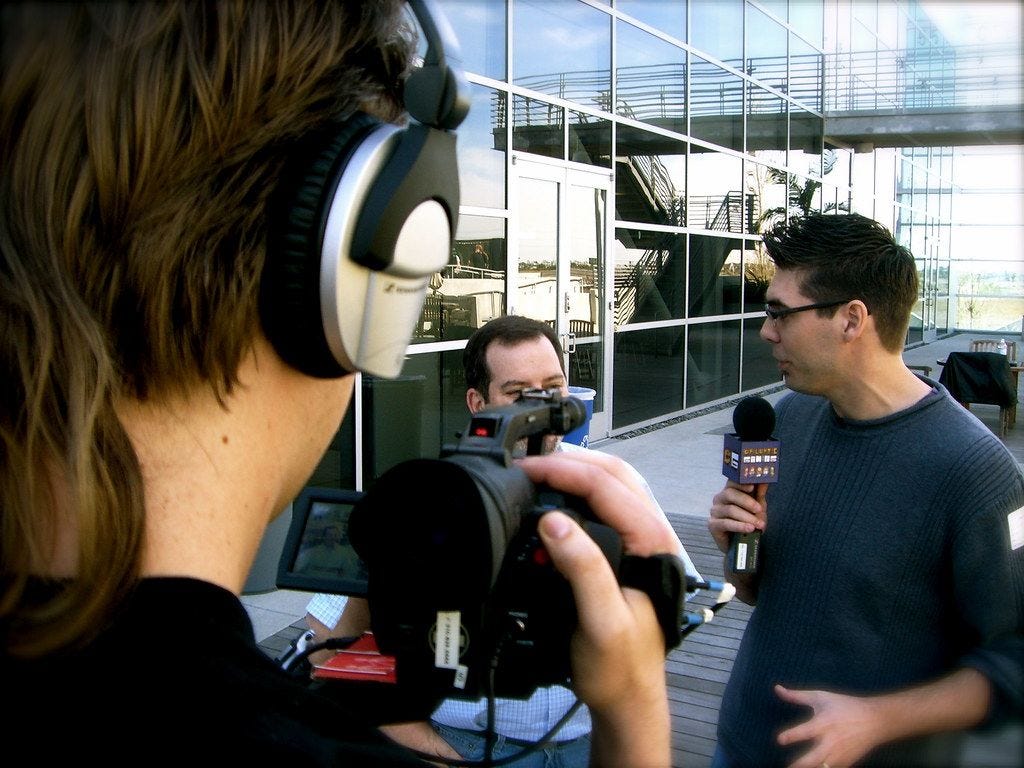
Part VI: Journey Before Destination
He didn’t get here clean. He got here the hard way: eyes open, no shortcuts. This is how it came together, and what it took out of him.
Passion. It runs deep.
It runs so deep.
I want to touch on the stigma of it being “weird” to watch someone play video games to outsiders.
Although improving, the stigma is still present. It’s all becoming mainstream, though.
[nods in understanding]
I never found it weird. The thought of someone else finding it weird is hard for me. I know people did find it weird, because I got plenty of that shit from people. What that did is it made me blind to the exact moment when it went from totally weird to accepted.
Streaming hypothetically was still way ahead of its time. Yeah, there was YouTube. Yeah, there were some livestreaming [happening], but it wasn’t really as prevalent until video game streaming started, putting forth hundreds and hundreds and thousands and eventually millions of hours of broadcasting. Netflix had a huge part to play in it, as well as Hulu, in the sort of larger culture war happening.
For example the eagles stream, when that got really popular. It eventually got parodied and ended up in an episode of Silicon Valley. There was there was a shift in culture, and that during that shift is when I think it just became so natural.
Was it weird I was buying video game magazines back in the day? I definitely didn’t think so. It’s like, a new medium becomes accepted and available for people to share and showcase gaming, and also find other people who have those similar passions. The chat as well, it just put it front and center. You and I could both love the ukulele, and we could both go on YouTube and watch a million videos of the ukulele, but there’s never an opportunity for you and I to interact; suddenly, there is.
The chat created an ability for all of us to connect with one another, where that’s our passions, the games we love, the esports we follow, a favorite player, whatever it may be. From there, bonds grow, and the idea of community comes to fruition.
You’ve mentioned in the past that it may not be such a far-fetched idea for kids to come home and turn on Twitch, versus a television, in coming years. I think you said this to Sundance in a conversation a while back?
It’s here. If I said that, it was a while ago because I take a look at my own son…
You know, I look at miniWHEAT [James], my 14-year-old son, and I have watched him grow up in this generational shift that we’re talking about where kids don’t watch television much anymore. If they do, they’re typically watching it on-demand and not on the schedule that the television dictates but where they are dictating schedules, perhaps via a friend recommendation. A friend of his might tell him to check this out on Crunchyroll, or sit down and watch Good Place with us [Marcus and his wife], but usually he’s only watching something if we tell him he needs to check it out.
The way that the new generations are consuming media and even the way that existing generations are consuming media, is completely changing. This is historically something that has happened since radio and has seen the peak of popularity, and then television came out and television saw the peak of popularity. Then the internet came out in the internet is seeing its peak of popularity right now and then evolving from there because now there are new ways via the internet to get your content.
Disney Plus, Peacock, Shutter, and all of these other things that are kind of like branching off to be their own thing; to me that’s creating sort of the new foundation for the question of, “Will it be toppled?”
I don’t know, I think the next innovation that hasn’t been made by anyone else but Twitch it is to combine viewing, community-building, chatting. Whatever that might be.
I would say in 2015 when you guys streamed the World Series of Poker, that was one of the first times where the idea of Twitch shifting away from gaming came up. That pulled in over a million concurrent viewers. Huge.
Yeah, that was definitely a time.
I have a lot of thoughts about this because television was fucking huge. We all agree, that television is still massive but television still has limited audience whether that is a local station or a nationwide network like ABC or Fox or CBS. Technically many of those audiences are limited to the United States, and sure maybe some syndication goes out to your up or other countries and some of that stuff comes back in, but there is an accessibility problem with television. Subscriptions, as well as not being able to watch anything on your phone.
Suddenly, the internet. Then, Twitch comes in and lets everyone know it doesn’t matter; you just need internet, and you have access to content from around the world.
That is drastically changing everything.
If I’m a company like PokerStars or the World Series of Poker and I have a worldwide audience, ESPN is actually the smallest slice of what I could accomplish if I had the ability to globally distribute my content. It makes sense that even as gaming begins to grow or other disciplines, whether that’s Magic the Gathering or chess at that are relative in and make sense in this space begin to use Twitch as a way to globally get their content into the hands of anyone who loves that thing.
The doors were opening pretty early, it was just that in this particular scenario, Twitch was very sensitive about going from Justin TV then to gaming and then you know?
There was a long time where an IRL stream or a travel stream wouldn’t have been allowed on Twitch. But again, I think like as that culture shifted and as it became a more accepted form of distribution in the way people are watching. Not necessarily accepted, but perhaps more aware that engagement was growing.
Everything has changed.
I know there’s still a lot of money and television and there’s obviously money and rights and that will always be there. But, if you are in a situation where you are seeking that global audience level; look at all the wrestling organizations, right? They are getting so much reach because someone from Poland can admire it and now watch it whereas before, they wouldn’t have been able to, however now it’s on Twitch and it doesn’t matter where this is taking place, as an example. I can still watch it and still enjoy it. So I would expect that. There’s going to be more and more of that in the future.


Twitch’s Core Audience
Will Twitch’s core always remain gaming, even if it becomes popular in other things, such as chatting or real life streaming? That’s the foundation.
Right. I mean… you’re talkin’ and as it stands right now…
[brings up Twitch’s directory]
There are 119,000 watching the Just Chatting category. That’s amazing. However, there’s 521,000 watching Fortnite due to an event, 109,000 watching Fifa, 105,000 watching League of Legends, and that’s just the Top 4, so you can see where I’m going with this. That type of ratio would have to shift over several years; it can’t happen overnight.
So, could it happen? Maybe.
Do I think it will [now]? I think it’s pretty doubtful, because you’ve seen gaming grow exponentially over the last 10 years. I see it as very friendly adjacent content to one another similar to things like
Why do you think other platforms have failed to overtake Twitch? For instance, Vine Gaming, Own3D, and AzubuTV to name a few.
It has a lot to do with timing. You’ve heard the phrase lightning in a bottle.
JTV and how that grew with what Justin Kan originally did and how it became an open broadcasting platform. It wasn’t the first one but, I think that it was one of the more recognized first one Stickam was kind of on its way down. Ustream was taking some interesting business directions.
JTV at the time felt a little bit more for the people. Obviously growing from that, Twitch because of the rise of gaming content which again makes a lot of sense. That’s one of the easiest things to start a broadcast for extended periods of time over to audience of potentially millions.
There’s just so much. Timing, a little bit of luck, the emoticons, the dawn of memes, there was a new lexicon that was being created. Kappa was kind of the first memes on Twitch, but you think of the millions of memes that have gone through the Twitch pipelines over the last 8 years.
Why could no one overtake YouTube, right? Fundamentally there becomes a time in which a service become so ingrained that any new player to the market is going to have to innovate reinvent or bring something completely different if they are going to want to overtake it right?
I also believe it has a lot to do with how the original founders of JTV. They wanted to build a global network to support; they were looking many years in the future and I think created something that was sustainable. The people that Twitch hired from the very beginning as well, very reputable individuals with great histories in gaming. There are so many reasons. That helped create really solid relationships in the industry that it that helped give guidance and Direction and all of it. To me, it’s more technology.
It’s a lot of then what happened on the people side. And who did they meet with and how did we connect with the community? Like I don’t even know the answer to some of these things.
What I can tell you is that one of the reasons I’m still at Twitch 8 years later is because this place is fucking special, man. There’s something about it and… if any one of us could actually put our finger on it or bottle it, we would all be bazillionaires, but then again it’s just one of those great mysteries of Twitch, you know?
If you asked a hundred people why they loved which so much you’d get a lot of the same answers, but then the third and fourth and fifth answer they’d all be completely different.
I know in my heart of hearts that it has a lot more to do then with something tangible. No amount of money can recreate the network and expect to compete with Twitch. It just takes more than that. It’s community, technology, the language which people use to speak with one another, it is all of those things. I get that it would be incredibly difficult for anyone.
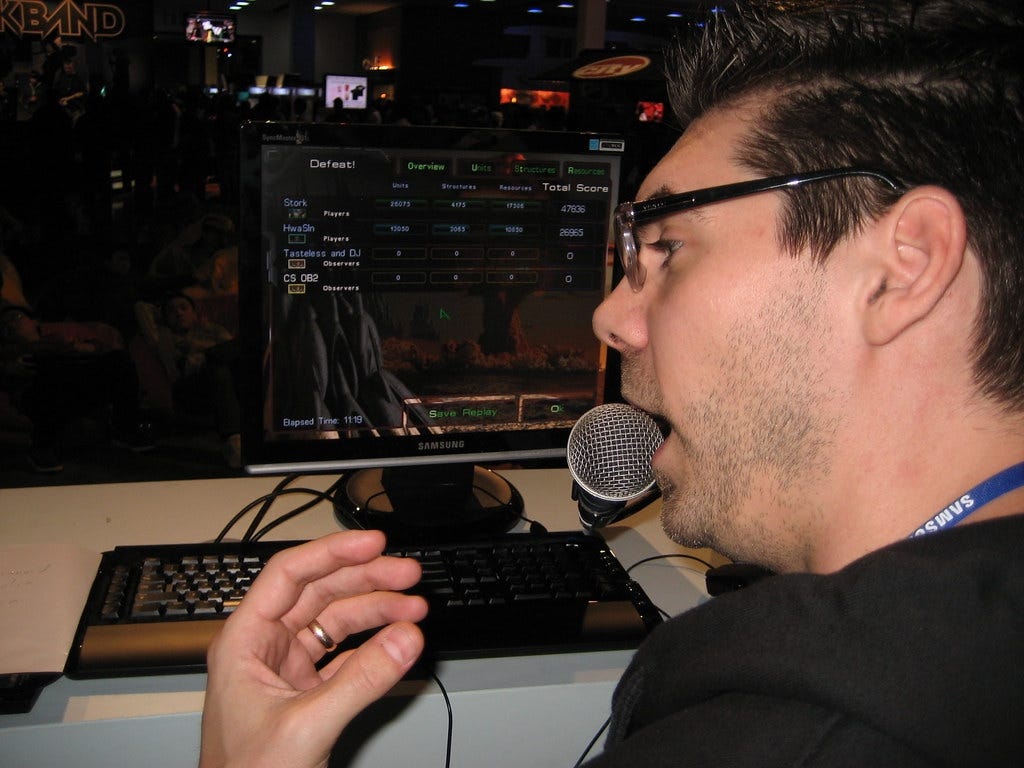
Esports Today
From its genesis to what it is now, are you satisfied with what esports became?
[laughs]
I mean it’s a super loaded question, and I know not intentionally, just because there’s so many different ways to.
[audibly grinning]
This was one of those questions we both knew was loaded, which is why he reacted the way he did. By this point I’d known Marcus for over a decade, and we’d watched esports mutate in real time, from infancy into whatever people insist on calling it now.
Talk long enough with the people who were there early and you’ll hear the same fork in the road, said a hundred different ways.
One camp believes esports was better when it was small and underground, when it belonged to the obsessives. That it lost itself the moment money showed up, when passion got replaced by business and the edges got sanded down for sponsors.
The other camp says that’s the tax you pay for growth. That every good thing either evolves or dies. That hierarchy, structure, and corporate gravity were inevitable, and the nostalgia people cling to is just a warm story they tell themselves so they don’t have to accept what time does to anything that gets big.
Marcus’ take sits where it always has: unfiltered.
First of all, yeah.
People should be fucking proud of where esports has gotten in the 20 years, right?
Imagine those 10 years that people are grinding out like we didn’t see much growth. It was like trying to watch a plant grow. Then suddenly, esports was kind of like watching a kid grow where it’s like it’s still happening slowly over time, but you’re noticing those changes, you’re seeing it. You’re noticing this is different than three months ago, this is different from last month, so on and so forth.
I still believe that esports is a crawling baby. For that reason, I think we’re going to make mistakes. I think people are going to fuck up. I think people are going to do amazing things. I think that we have to realistically know this is the stage that we’re in and we have to like try to not go into the toddler stage, and doing the “but, I want to be a teenager now,” because that’s what I feel like that’s what is happening right now, that esports is probably trying to grow up a little bit too fast.
That’s why we’re seeing millions of dollars go towards franchise spots and I mean like great, you know, like more power to the people that want to do that but for everyone else these are going to be intense learning moments because not every single one of these things is going to be successful and not everyone is going to have any sort of multi-year legacy that will come from it. Teams will both fall, and rise from the ashes, right?
It’s just like right now I think esports is in a really volatile position, but also in a position where I don’t think that if the bubble word a burst the proverbial bubble word a burst that esports would be in trouble because esports is so well-established now and does have so many big players and does have you no more fans and it’s ever had and even if an OverWatch League disappeared or the Cod League disappeared or you know, right there’s going to be other leagues.There’s going to be other games I worry about I worry about like sponsorship Skip and like sort of brand involvement because of that right because of hey, if you spent a lot of money, it doesn’t work out. Do you think you’re going to spend a lot of money again? No, probably not.
I mean to that point, Mountain Dew was a big sponsor of CGS, they got burned and think about how long it was before you saw Mountain Dew again in esports. I think that was a direct result. I can’t speak for certain. I don’t work for Pepsi or Mountain Dew but I believe that result of like feeling very burnt. Touching the stove, getting burnt, and not doing that again.
They could also consider being burnt, but consider the positivity happening and recognize that as well; this is yet to be seen but I’m very happy with the growth of esports. I mean, it’s been an unbelievable growth over the last, what? 20 years? I think that in the last five years we’ve had exponential growth where we hit that first esports event in a stadium and suddenly like that’s a normal thing.
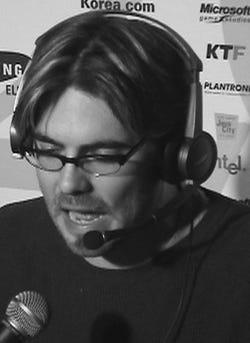
More structure as well, all around. You were even inducted into the esports Hall of Fame, that was a milestone.
Not only an amazing moment for me, but a very eye-opening one as well; it means the world to me. I never set out to do esports with the hope of like one day making it into some hall of fame. It’s absolutely surreal to me that that is something that would happen. Just based off the fact that I was just I was just a kid who loved competitive gaming and I followed my dream and had an addiction to it. I love to be able to say that was a small part of it. That means a ton to me.
I feel like I finally was able to say that I cemented my legacy and esports and I’m not done yet. Don’t get me wrong, but that era and being recognized for that not only as a commentator but also just as an evangelist right? That’s what I’m most proud of, and Michal Blicharz [Carmack] might be another great one; I remember we’d have conversations thinking how fucking huge esports would be one day. There’s not a bone in my body that doesn’t believe that to be true.
I remember going to events and talking to Carmack and I would leave and I’d be like, “fuck, yeah man, I’m going to cast twice the amount of games now this week, and I’m going to do this, and this, and I’m going to join,” you know? Lots of motivation from incredibly motivating people keeping that dream alive.
All the passionate people, be them individual players, team owners, broadcasters, or otherwise that I got to work with.
At the start, it was his parents who kept the lights on and the doubt out. Later, as the stakes grew heavier, it became his wife and his child.
For all the scale and noise that came with success, Marcus never did this alone. Behind everything he built was a small, immovable unit that mattered more than any title.
The question worth asking now isn’t what he achieved, but who stood with him while he did it.
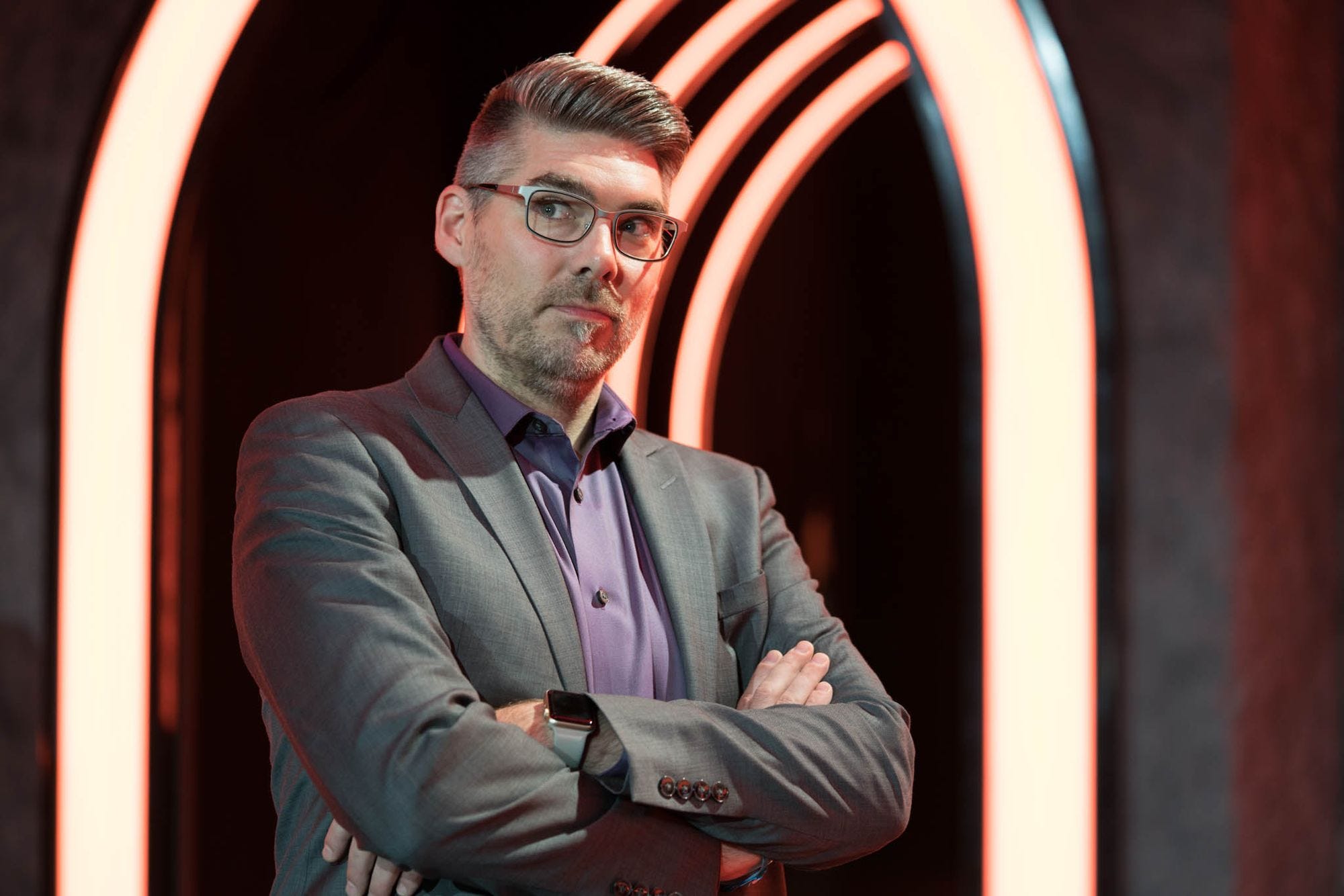
Part VII: Family
A quarter century in, Marcus looks back and understands the truth of it: without family, none of this ever happens.
Family is Marcus’ north star. In an industry built on volatility and bravado, it was his support system that made the chaos feel navigable. Nothing mattered more than Jennifer and James, his wife and son.
Before that, it was almost a game. Bachelor life, no guardrails. No real safety net. Decisions made fast, on instinct, because the only person taking the hit was him.
Marriage changed the math. A child changed it again. Suddenly every risk had a shadow. Every late night and last-minute flight had a name attached to it.
Now Marcus has eclipsed two decades in the industry, taking leaps that look obvious only after they work.
So where did all of that take his family?
Jen and James have been with you for as long as you can remember as a support system, and in the end, it all worked out. That isn’t the case with everyone.
Right.
If there is one piece of advice that I give everyone, it is to ensure you have a support system in place to help you achieve your goals and chase your dreams. I simply cannot imagine a world where I didn’t have Jen and James with me on this journey. On bad days, I have them to turn to. On days of success, I have someone to celebrate with. Doing anything alone is going to be tougher than having a support system… and I cannot stress enough just how much of a factor this has been in my own career and success.
It comes at a cost, though. There have been many times where I have turned something down, or decided to go a different route because I always factor in my family as a variable for my decision. There have been many jobs/companies/offers that I have turned down over the years. Maybe the job or project fit into what I was hoping to accomplish, but required moving to a city or state that I wasn’t comfortable living in. So while having a support structure is key to success (regardless of whether it is family or friends), it will ultimately change the way you think about the opportunities and risk that you may have in front of you.
Our family most certainly has had a wild set of adventures together which has run parallel with my career path… but what is life if it’s not meant to be lived? This philosophy has helped my wife and I get through some of the toughest times, and I hope that rubs off on James as he continues to grow and mature.
It should also be noted that while we’ve had our fair share of difficulties over 20 years, I’ve never once heard my family complain. Sure they would prefer if I did less traveling, but I’ve never felt like I was being a burden on my family or our day to day lives. They are a part of this journey just as much as I am, and I think that’s obvious when you look back at some of the choices that we made together over the course of my career.
The Graham family is most certainly one of the key factors to my success. We have learned and grown from the risks that we have taken, the challenges we’ve put before us… and it’s comforting knowing that they are there during the highest of highs and the lowest of lows.
Jen’s your rock.
There is an episode of Lost called The Constant. It’s regarded as one of the best episodes of Lost and some have said that it’s one of the best episodes of TV ever made. The episode centers around the idea of time travel. As you can imagine, time travel (even in fantasy) is complex. This episode centered less around the complexity of time travel itself and more on the effects it can have on us as humans.
One of the major themes throughout is that the only way we can mentally guide ourselves through time travel is by identifying a “constant”. That’s someone who is there in both the past and present who serves as an anchor for your mental stability.
Jen is my constant. She’s been there through every single step of my career and she has grounded me and kept me mentally stable through the entire journey. Yeah… it’s not time travel… but this episode speaks to my heart because it tells us that with our constant we can get through the universe’s most difficult challenges. Jen has been that level of deep support since day 1.
She’s never given me shit for playing games, or filling the house with talk shows/commentary. She’s never complained about moving. She has always been supportive in helping me talk through options, opportunities, and career. And I should make it clear. Jen doesn’t act as a secretary or assistant to me in anyway… she is a partner.
My decisions, my work, my dreams and aspirations… she is a 50/50 partner in all of it, and I feel like that has allowed us to exceed even our own expectations and work as a unit and team through thick and thin.
James acts as a rock for both you and Jen. You’ve said he’s been the most supportive member of the family, talk to me about that.
Speaking of working as a unit and team… I would say that my career and the crazy journey we’ve been on has allowed us to teach some very valuable life lessons to James over the years. One of the things that we consistently message is that we, as a family, are a team. And as a team we tackle the toughest challenges, we support one another, and celebrate together, and we pick one another up if we happen to fall or fail. When one member of the team doesn’t work with the team… the whole team suffers.
Given these lessons, James has been most supportive because he has been a team player. In fact, he’s been such a good team player that we will often bring James into our discussions and decisions around our bigger plans. Sound crazy? Letting an 8, 10, or 13-year-old be a part of your decision-making process? I’ll give you an example. Summer of 2018 my wife and I had begun discussions about moving back to Nebraska. There were many reasons for this, one was because we wanted to put James back into public school after homeschooling him for 4 years. Another reason is because our larger friends and family network was in Nebraska.
We had the opportunity to move back, build our “forever house”, and continue to follow our dreams from a more comfortable location. We went back and forth about whether or not we should plan to move back in 2019 or wait until 2020 (which would have been James’ first year of High School). For months we discussed the pros and cons of both times, evaluated what would be easiest for us as a family and for work. Ultimately, we decided to basically give James the final say. We simply laid out our thoughts, presented the options, and said, “Would you prefer to go back in 2019 so you can do a year of Middle School before your first year of High School? Or would you be fine waiting one more year, and then moving back in 2020?
He said, “I want to move back to Nebraska in 2019 and attend a year of Middle School before High School.” And that was that. James has been supportive of us because we’re his parents, but I think he has contributed to this family just as much as Jen and I in what he has endured and the decisions he has helped us make.
As a side note, we could have never actually expected it, but that decision put us in a very good place given the status of the world in COVID19. Had we waited until 2020, we may not have had the opportunity to move at all, because our house would have likely not finished, we wouldn’t have been able to hire cross country movers. During this quarantine we’ve actually talked quite a bit about how James (unknowingly) helped us avoid one of the biggest challenges we would have ever had to face.
You’ve taken immense risks, which we’ve spoken about thus far. What fuels your belief in these leaps of faith? Do you speak it into existence, something else?
I took risks because I have always been a believer. Whether it was Esports, Livestreaming, Video Games, the internet, or building communities… I’ve always believed that these things would be something that would be important parts of our lives. I WANTED to be a part of those things. I let that belief fuel my passion.
“Everything happens for a reason”. Some may think that’s an easy way to justify the things that happen in life, but I embrace this saying to the fullest. Sometimes you’re going to get dealt a shitty hand. It is easy to get frustrated, angry, and upset when you’re dealt this hand, but it has always seemed more productive to figure out if there was a way to turn that shit hand into a winning hand.
Examples of this:During Q3, Clan519 won a NA Online Tournament in which we won travel to the EU to play against the best EU teams in the world. The timeline though was so rough, that I wasn’t able to get a passport so I could attend with the team. I gave my spot up. That really sucked. However, that ended up being the first time that I gave commentary and online coverage a shot, and instead of crying over not being able to attend, I stayed up all night to commentate and cover Clan519 to support them in the best way possible. After an incredibly successful broadcast, I essentially created a pathway for my future career off of a “shitty hand”. Championship Gaming Series 2009. When it shut down, it was devastating. I told the story earlier but we decided to move back to Nebraska. I could have just conceded at that point, but that was also the time when livestreaming was picking back up. By being put back into a “reset” position, I was able to explore the world of streaming all over and, and that made me fall back in love and realize that
I didn’t need a multimillion dollar company to chase my dreams. I did it back in 2002, so let’s do it again.
Taking the risk isn’t the hard part… dealing with the ripple effects of those risks is where the difficulty lies. Taking any risk means you have to be willing and able to fail. And because we’re defined by our failures as much as we are defined by our successes, these ripples are oftentimes our best moments to learn, reassess, and rebound. You simply cannot prepare for everything, and I think success is also measured by our ability to pivot and acclimate to our current situation.
So yes… I would say Self-belief and confidence were a big part of why I was willing to take risks. I always had a plan B and a plan C… and even if those blew up, I would be determined to find a plan D. Being able to plan is a huge skillset to have, but being able to react is just as important.
Let me also make something very clear. Success takes time. Sometimes YEARS! And even when you have reached your goals, you’ll want to keep going and strive to accomplish more. There have been so many individuals who I’ve worked with who are frustrated because they haven’t found success despite grinding for years. My story spans over 20 years, and I can confidently say that 12 of those years were grinding, sacrificing, and hard work with very little in return.
However, I call back to “Journey before Destination”. How you carried yourself on the path to success will be far more important to the world than what you ultimately accomplished.
Jennifer Graham
The ebb and flow of Marcus’ career isn’t optional once you have a family. You don’t get to pretend the swings won’t land somewhere. It’s part of the deal, and Marcus learned to live with it, to adjust, to keep moving without pretending it was easy.
I wanted to make the support structure real, not implied. So I reached out to Jen and James for first-hand insight, something they’d never offered before. It mattered to hear it from the people who absorbed the late nights, the pivots, the uncertainty. To get both sides of the story, and let everyone in that house have a voice.
Jen, you and Marcus have been together for two decades. Could you offer some insight regarding how his motivation to achieve dreams has changed, if it has?
I wouldn’t say that Marcus’ motivation to achieve his dreams have changed over time. He’s always been extremely motivated and passionate about the things that he cares about whether it was Quake, shoutcasting, Twitch, the content creators. As his dreams have evolved, his focus has changed perhaps, but he has always been someone who gives 100% x10 to whatever challenge he chooses to tackle.
You’ve had to move often, and Marcus has had low job security in the past while being in that space of trying to make his dreams a reality. How did this affect you and your family?
As someone who was raised by a single dad most of my childhood and spent a lot of time moving around often, neither of those things really bothered me and instead made me very adaptable to whatever situation was placed in front of me. While at times, moving away from familiar things - family and friends especially - was hard, we’ve always just made the best of things. It’s not like we were not aware of any of the challenges a move or job change could bring. We take a lot of time and discussion before coming to any major life decisions, but if it feels right, we’ll usually take the leap. Sometimes it works out, sometimes it doesn’t, but without taking some risks, there also would not be any rewards.
As far as how it has affected James, we have always tried to make things as normal and easily adaptable for him. We keep communication lines open, keep him informed, ask his opinions and feelings, and if a problem comes up, we come together as a family to solve it. He has had a fairly unconventional childhood, but we have always tried to keep it as well rounded as possible and James seems to appreciate all the different experiences he has had through his life so far.
Our greatest lesson as a couple and family has been communication. As long as we effectively communicate with each other, I feel we can do and tackle anything in our path.
James came into the picture, and suddenly there were 3 mouths to feed, not 2. How did this change Marcus’ drive? Was he more cautious versus the mindset of a fearless couple out to conquer the world?
We found out we were pregnant about six weeks after our move to Los Angeles in 2005. I don’t think either Marcus or I were ready for that news right then. We had been married for less than a year, had just moved to Los Angeles, and while we had been preparing to start on expanding our family, we hadn’t been expecting it to happen quite that fast!
We had to quickly settle into our new roles of expectant parents while juggling trying to find our feet in a new city and, for Marcus, his new job at GGL. Those years in Los Angeles were pretty rough on both of us, but it taught us a lot about how strong we can be together as a unit working together.
I think becoming parents made us more determined to build and provide a secure base for our son, but we also wanted to continue to lead him by example to not be scared to take those chances to reach for your dreams.
[pauses to reflect a bit]
I honestly don’t know what is in our future, but as long as we confront it as we always have, together, then I’m sure we will conquer whatever Life throws our way. Beyond the knowledge that the only person I would want to travel this journey with is Marcus, not much in our life has gone according to any sort of a plan. It has been an incredible roller coaster of an adventure so far, but I do not regret any of it at all.
Out of all those ups and downs, which part tested your strength the most?
We’ve definitely had our ups and downs over the past couple decades, but I would have to say the toughest situation was probably the year of 2008 through 2009, as a whole. James was two, going on three then, that was also the year Marcus left GGL and went to work for CGS full-time, and then everything came crashing down at the end of the year with the financial crisis and CGS closing its doors.
As parents of a toddler and on unemployment, living in one of the costlier cities in the US, it was really rough for us. We tried sticking it out for a couple months while Marcus tried to find another job in the Los Angeles area, but we finally had to make the decision that it would be more cost effective for us to move back to Nebraska, where we still owned a house and the cost of living was a lot lower, and we both had potential job prospects and family there to help us out.
While making that choice was a huge blow, ultimately, it was the right decision for us as a family and a couple. We learned so much about ourselves, us as a couple, and as parents that year. It made us so much stronger as a unit having gone through that together.
The happiest moment?
I’m always so proud of my husband’s career achievements. I don’t know if I can name the happiest situation because every time he is recognized for his contributions, whether it’s the Lifetime Achievement in Esports or being inducted in the ESI Hall of Fame or an article or interview highlighting his career…
My heart blooms with so much pride and happiness that all of his hard work, heart and passion that he puts in is being acknowledged.
Then, a long pause. Jen wanted to take a moment to speak on what Marcus means to her.
He’s my very best friend and partner, an incredible father and husband. I have always been very impressed with Marcus’ work ethic and passion when it comes to the things he cares about. I know he will continue to champion those causes, and to help and support those around him to achieve their dreams, too.
I’ve never met anyone with as much heart as Marcus, and I hope that we’ve raised our son to have that same heart, empathy, and passion for Life.
James Graham
Your dad’s a large figurehead within the gaming industry. He’s an established name across the entire esports landscape; what do you think of that?
I personally believe it’s fantastic. It’s quite inspiring to see my dad become a great figure in the esports community, and I do aspire to be like him in the future. I’ve always enjoyed gaming, and the community surrounding it, especially because of the connections people have with others.
I’ve heard his story, and honestly, it’s impressive how much time and effort he puts into his work, he’s always super motivated, and he never gives up. I always thought that he’s also just a great leader overall, especially when working with his team.
You’ve grown up surrounded by gaming, even esports, your whole life. What’s your earliest memory of that?
I usually have a terrible memory, but some of the earliest memories I have was when I first played StarCraft 2. I knew I watched my dad play a lot, and I wanted to try it, so I started with Zerg, and it was fun.
I’ve always been enthralled by gaming, and a lot of it is because of its presence today. Since I first played StarCraft, it’s captured a lot of what I enjoy in games, especially now when I can go back and watch videos of my dad’s old streams and casts.
Replaying memories has been a big part of my life because of this.
What’s your current dream, right now? What path do you want to take?
I don’t really have much of a current ambition in life I guess. I’ve always wanted to get into something either in Esports, engineering, or something of the sort.
Engineering just fascinates me, along with science, it’s great being able to discover things about this world. I’ve always thought that being able to understand just about everything was cool. Science just as a topic is fascinating though because we don’t know everything, and our goal is to pretty much learn what we can.
Over the years I’ve been just trying to find something that fully interests me though, and although I’ve not exactly become invested in much to the point of I want to do it for the rest of my life, I think I’m becoming more comfortable with my options.
Talk to me about moving to California. What were the pros and cons of that?
I really enjoyed the food. There’s a lot that was great there, and some of the people, especially ones from my dad’s workplace were fantastic. It’s definitely not my style, and I’ve never been that much of a city person. Cities are usually so busy and bustling, and it really rubs me the wrong way, I guess.
I will say that cities do have their benefits, as mentioned before, the food is just fantastic. I also just didn’t go out a whole lot in the city, mainly because sometimes, it could get very dirty.
Summers also kind of sucked, but overall, I don’t think I’d trade it away for another experience.
Then, you moved back to Nebraska.
I for sure prefer Nebraska. It’s just my home at this point, a lot of family friends are here, and family is nearby. It’s also where I’ve just met a lot of my friends.
Everything’s all so spread out too, and it’s been nice to not have to think about a whole lot. Nebraska is just easier to navigate as well, at least in my opinion.
Things are a lot more organized, and there’s also just a lot more space in Nebraska, both in where we live and just the general area. I also think it’s just more relaxed too.
You have the whole world as your stage and you’re given an opportunity to praise your parents. What do you say?
If I had to praise my parents? I really wouldn’t know what to say. I love them both, and they’ve been great at giving me that push I need to move. It’s just amazing how great they’ve been, and I really wouldn’t change anything about them.
They’ve just been really good at supporting me, and themselves, and I think they’re just great mentors. I really love them.
It was then time to pose final question to Marcus. What did this all really mean to him?
The Legacy
Years from now, when you’re no longer in the room and your name still comes up, what do you hope it means to the people saying it?
This shouldn’t be such a difficult question to answer… but it is.
I think we all want to leave behind a worthwhile and substantial legacy, but we often don’t get a chance to choose what that legacy may be. So I think it boils down to what I think people will remember me by.
And that’s for having an unbridled passion and belief when it came to things like esports and livestreaming. These are two things that I’ve put a better part of half of my life into, and two things that I hope people reference as a party of my legacy. I want to know that I’ve made a difference in helping Eesports and livestreaming get to where they are today. I want people to know about the sacrifices I’ve made because I had a stonewalled belief that every minute of work was worth it.
I mostly want people to look back and use me as an example to say, “If you have a dream, just keep going for it… even if it means falling down and getting back up over and over again”. What we achieve while chasing that dream is often times more rewarding than the dream itself. One of my favorite book series of all time, The Stormlight Archive (by Nebraska native Brandon Sanderson) has drastically driven my perspective on this.Journey before Destination
By this fantasy book’s definition [Way of Kings], the saying “Journey before Destination” means there are always several ways to achieve a goal, failure is preferable to winning through unjust means, and protecting ten innocents is not worth killing one. In the end, all men die, and how you lived will be far more important to the world than what you accomplished.
It might seem odd that I use the basis for a fantasy book to help shape my life and direction, but it just resonates with me so much. I look back on my journey and I confidently feel that people will remember how I lived and carried myself versus what I accomplished… and that’s the best feeling in the world. Knowing I’ve been able to touch the lives of people in this world is one of the best legacies that one can leave behind.
When I’m gone, I hope people fondly remember my passion, excitement, dedication, and sacrifice throughout my career, and then say, “Oh, yeah, he was one of the first commentators/livestreamers/etc.”
I reached out to Brandon Sanderson himself, author of The Stormlight Archive, to find out what the phrase’s inspiration was:
The words
Journey before Destinationbecame my mantra while writing the book [Way of Kings]. I had begun to focus too much on results—on getting the novel finished—and not on making certain each step along the way was worth reading. I turned it into the story’s own theme, because the more I’ve found myself focusing on it, the better my life became.
I hope it will help readers keep their attention on making each day of life worthy in some way, and not abandon who they should be right now in order to achieve some distant goal that may, or may not, be worth such sacrifice.
Only the Beginning
Twenty-five years in, he’s still working like it can all disappear.
All of it traces back to a small act of faith on a cold Christmas morning in 1989. His parents gave him room to explore, to follow a curiosity that didn’t come with instructions or guarantees.
As the project winds down, Marcus and I both feel the weight of time. We started this in 2017. Different cities. Different lives. The years in between left their marks on both of us.
I ask if there’s anything he wants to fix before we call it done.
He grins, takes a sip of his coffee, and nods as his mind drifts somewhere else.
A pause—long enough to mean something.
Then he looks back up, focused again, and says:
I’m realizing what this really should be, is a book. I’m not even 5% in.